1832
A first crossing at Kinzie
A bridge crosses the North Branch at Kinzie Street, before Chicago becomes a city. The steel road bridge at this crossing today is a later structure, opened in 1909.
1832–today
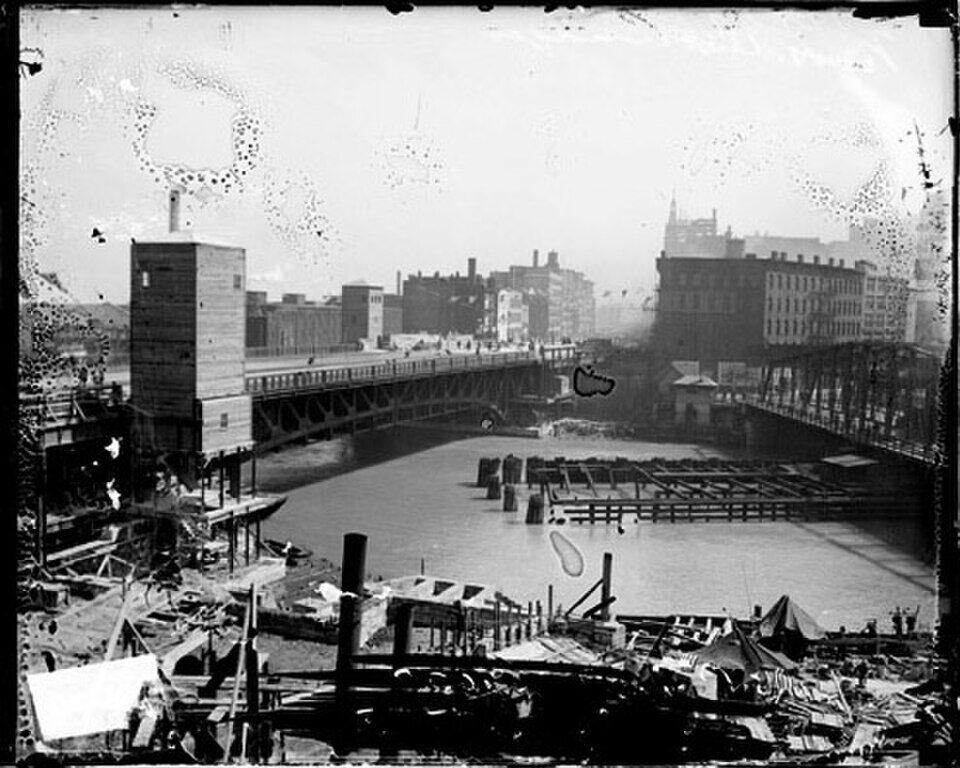
A bridge crosses the North Branch at Kinzie Street, before Chicago becomes a city. The steel road bridge at this crossing today is a later structure, opened in 1909.
Chicago builds a wooden drawbridge at Dearborn Street. Chains lift its leaves for boats, but the unreliable bridge often leaves street traffic stranded.
A destructive flood carries away Chicago’s early floating bridges. Replacement crossings follow, but the city continues searching for structures that can survive the river and still let ships through.
An iron swing bridge opens at Rush Street. Its central pier supports a rotating span, but also divides the river into two narrower passages for boats.
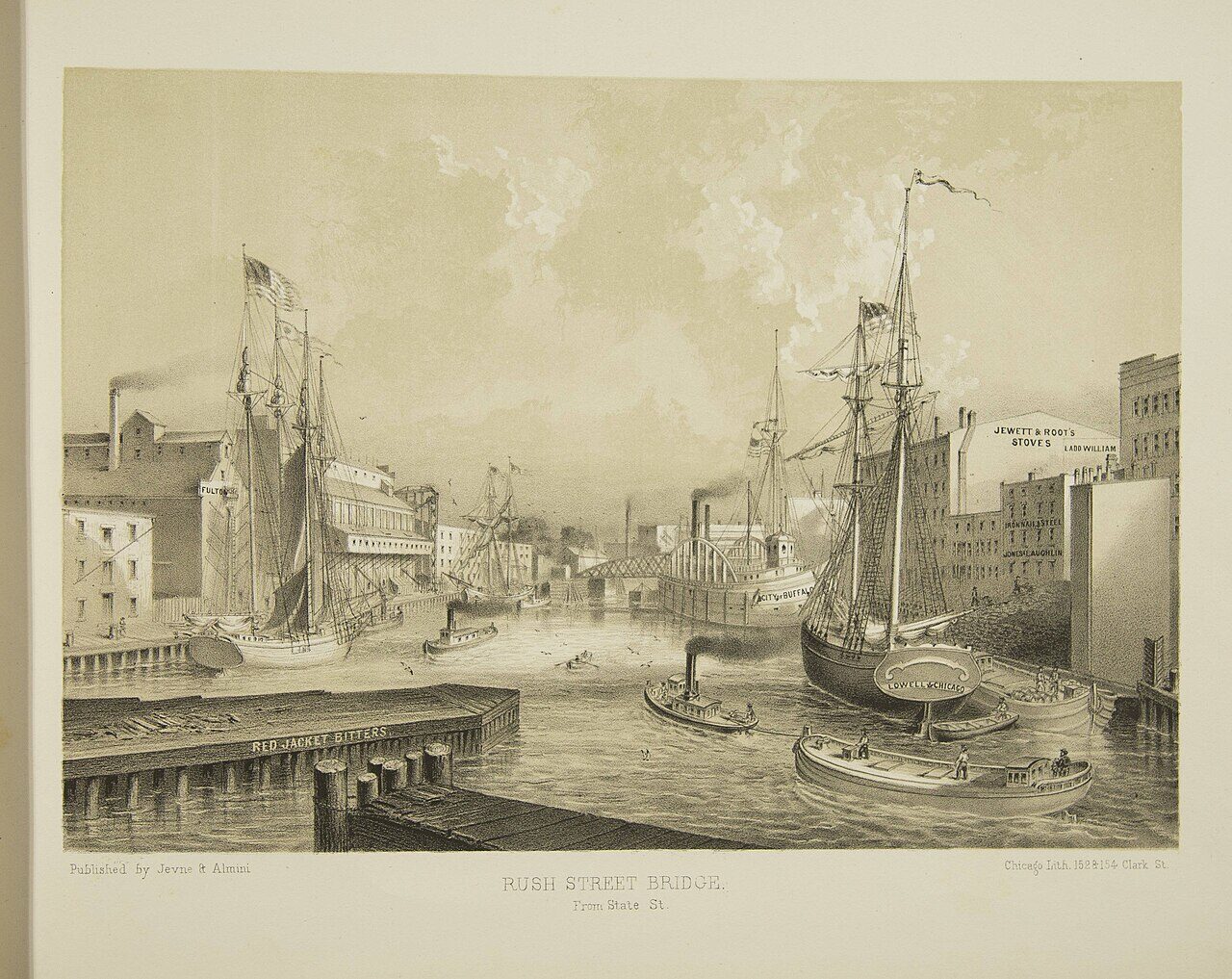
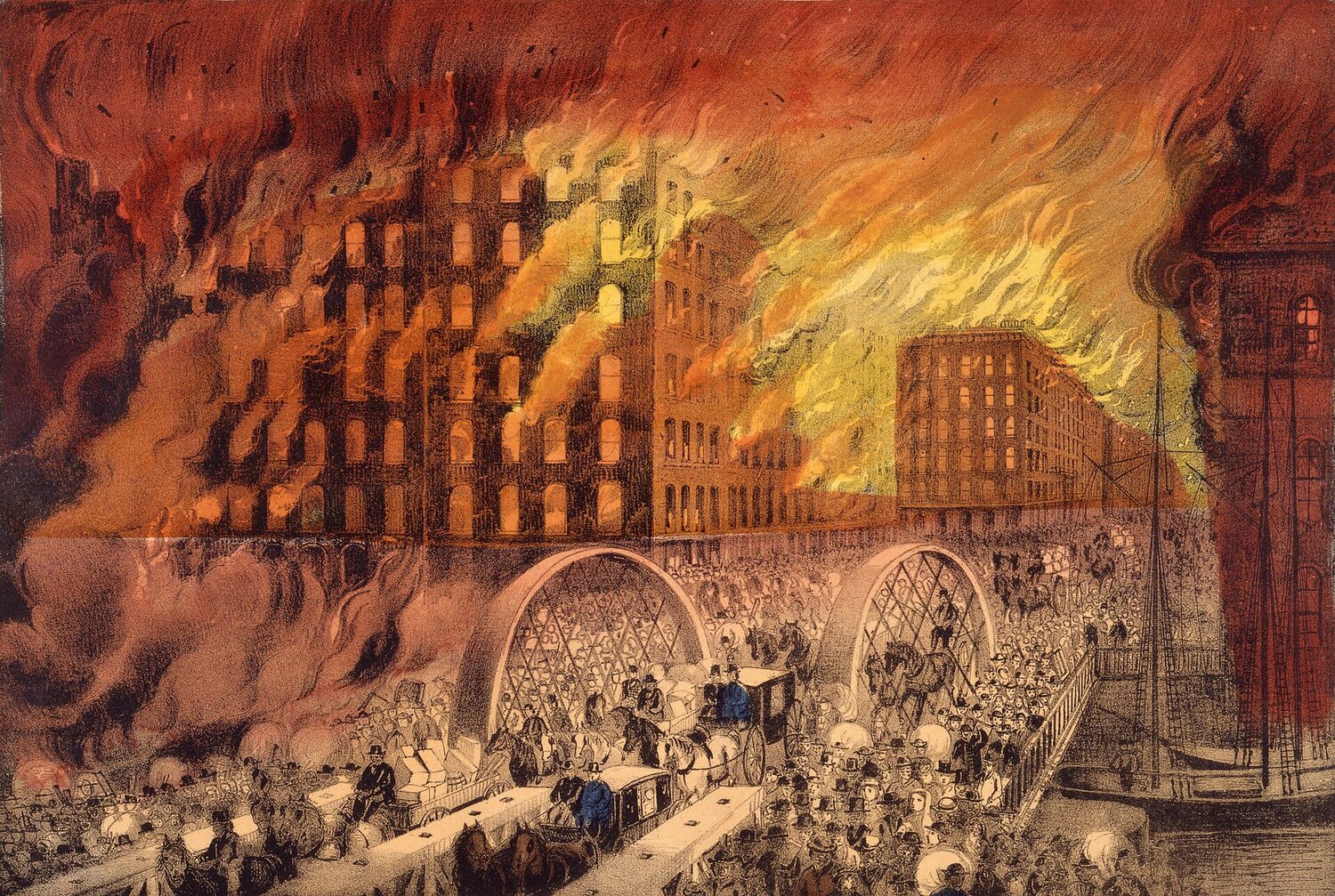
The Great Chicago Fire destroys the Rush Street Bridge. The city replaces the burned crossing with another iron swing bridge in 1872.
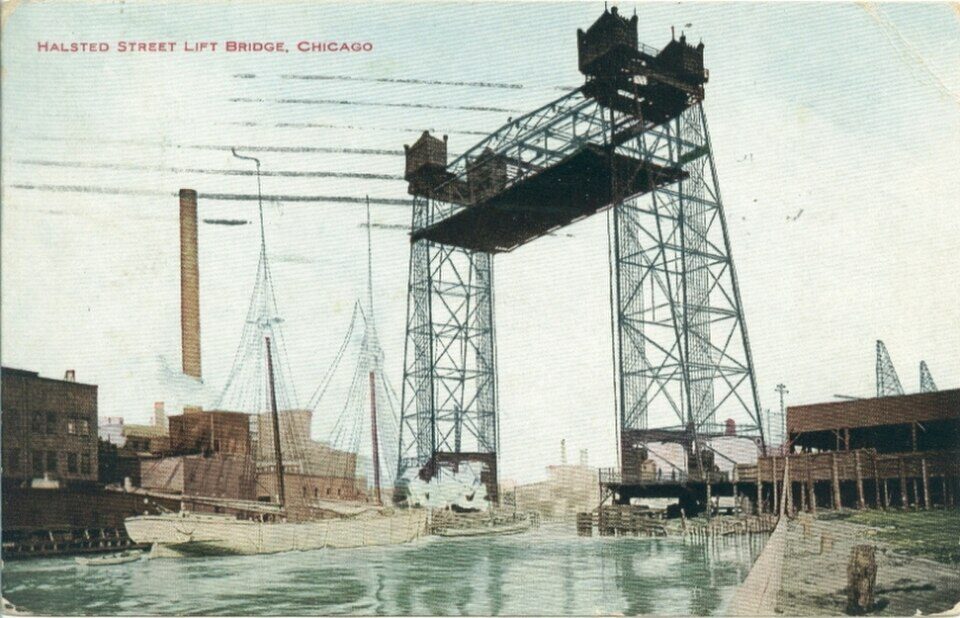
J. A. L. Waddell’s Halsted Street bridge lifts its roadway vertically between two tall towers. With no pivot pier in the channel, it offers ships more room than a swing bridge.
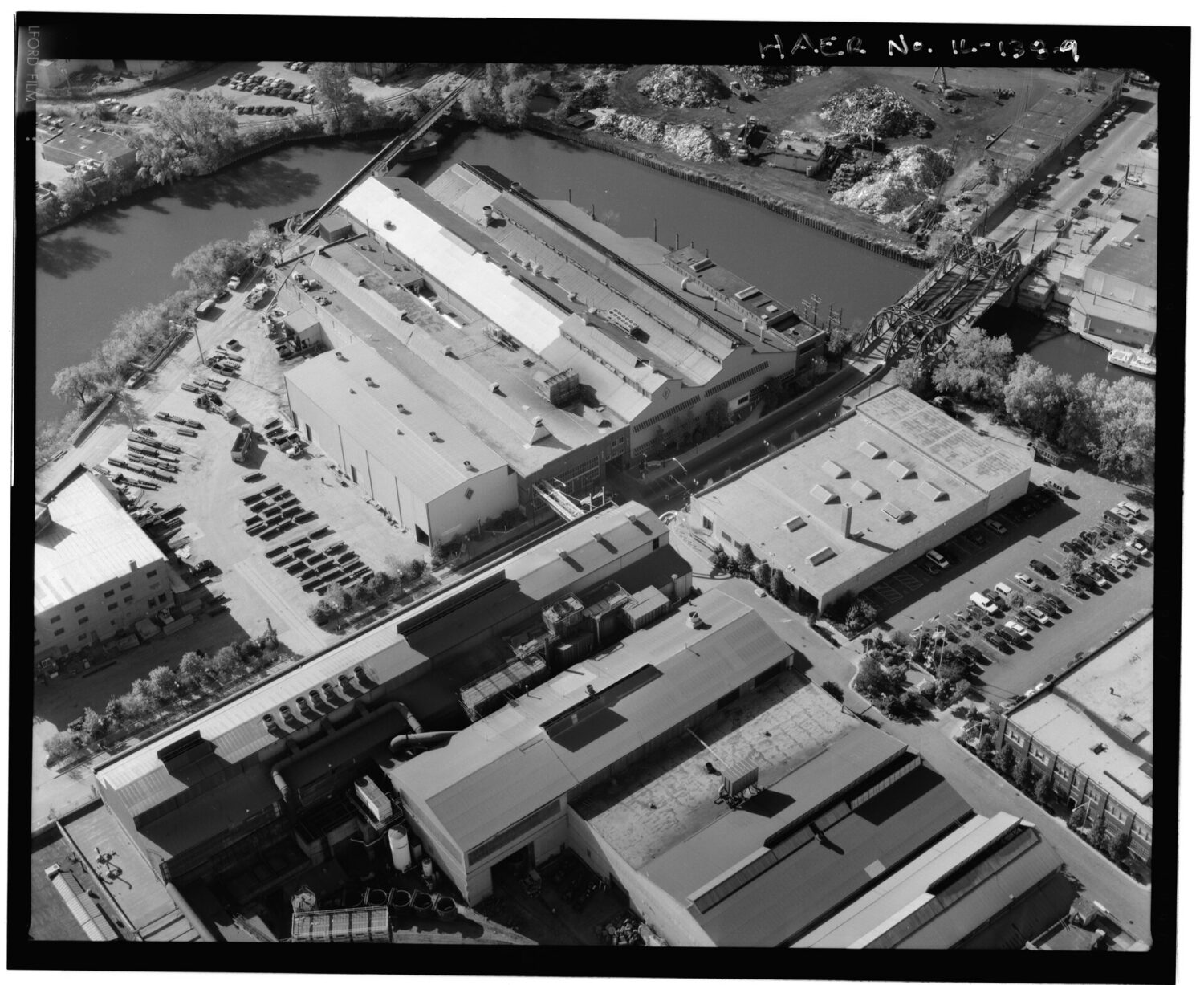
Scherzer rolling-lift bridges appear at the Van Buren Street and Metropolitan Elevated Railroad crossings. Curved ends roll backward as the spans rise, clearing the channel without a center pier.
The Cortland Street bridge opens with leaves that rotate around fixed shafts, or trunnions. Its counterweighted design becomes the model for Chicago’s later movable street bridges.
Joseph Strauss’s railroad bascule opens beside Kinzie Street. Its overhead counterweight remains one of the most recognizable industrial shapes on the North Branch.
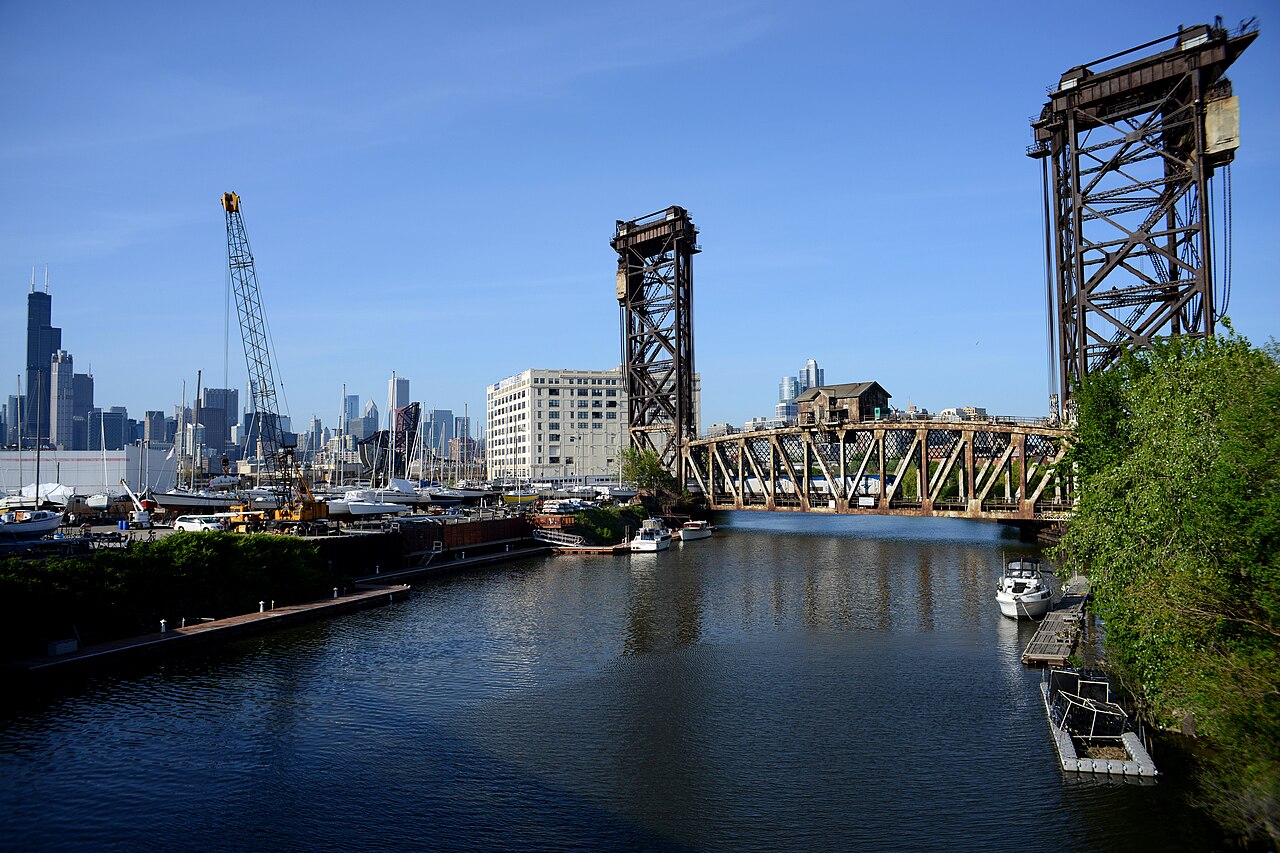
Waddell & Harrington’s Pennsylvania Railroad Bridge opens near today’s Ping Tom Park. The entire steel railway span rises between its towers; it is also known as the Canal Street Railroad Bridge.
Lake Street’s double-deck bascule opens in stages: elevated trains in March, streetcars in October, and cars and pedestrians in November. Rail and street traffic share one movable river crossing.
The Michigan Avenue Bridge opens on May 14, fulfilling a major proposal of the 1909 Plan of Chicago. The new connection links Michigan Avenue to the North Side and helps transform the corridor into the Magnificent Mile.
James Earle Fraser and Henry Hering add monumental reliefs to the Michigan Avenue bridgehouses. Their four scenes depict exploration, settlement, conflict at Fort Dearborn, and rebuilding after the Great Fire.
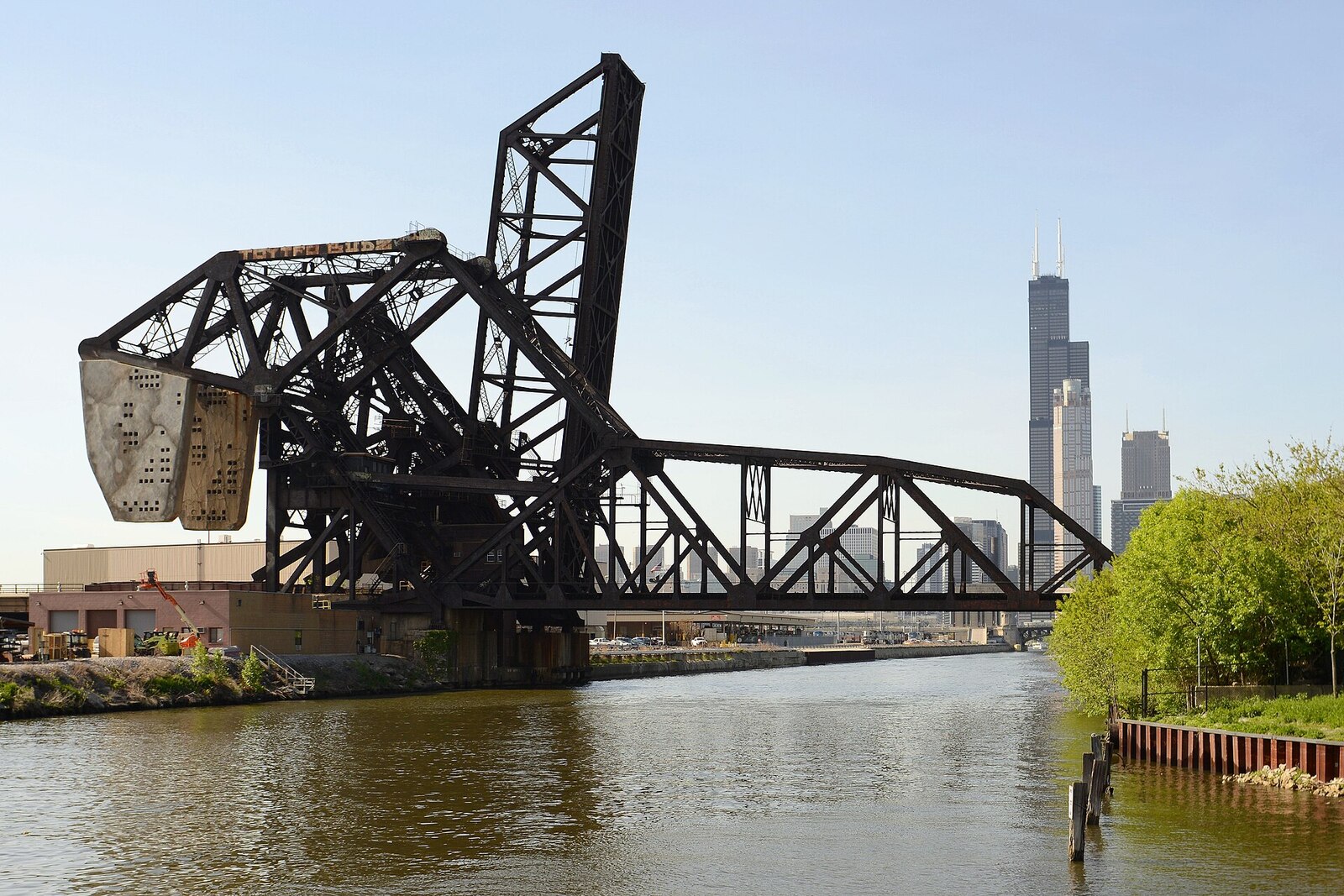
The St. Charles Air Line Bridge is relocated as the South Branch is straightened. Completed in 1919 with a future move already anticipated, its original 260-foot leaf is shortened by 40 feet for the new channel.
The Outer Drive Bridge opens on October 5, carrying Lake Shore Drive across the river. It becomes the easternmost downtown river crossing, at the eastern end of the Main Stem, close to Lake Michigan.
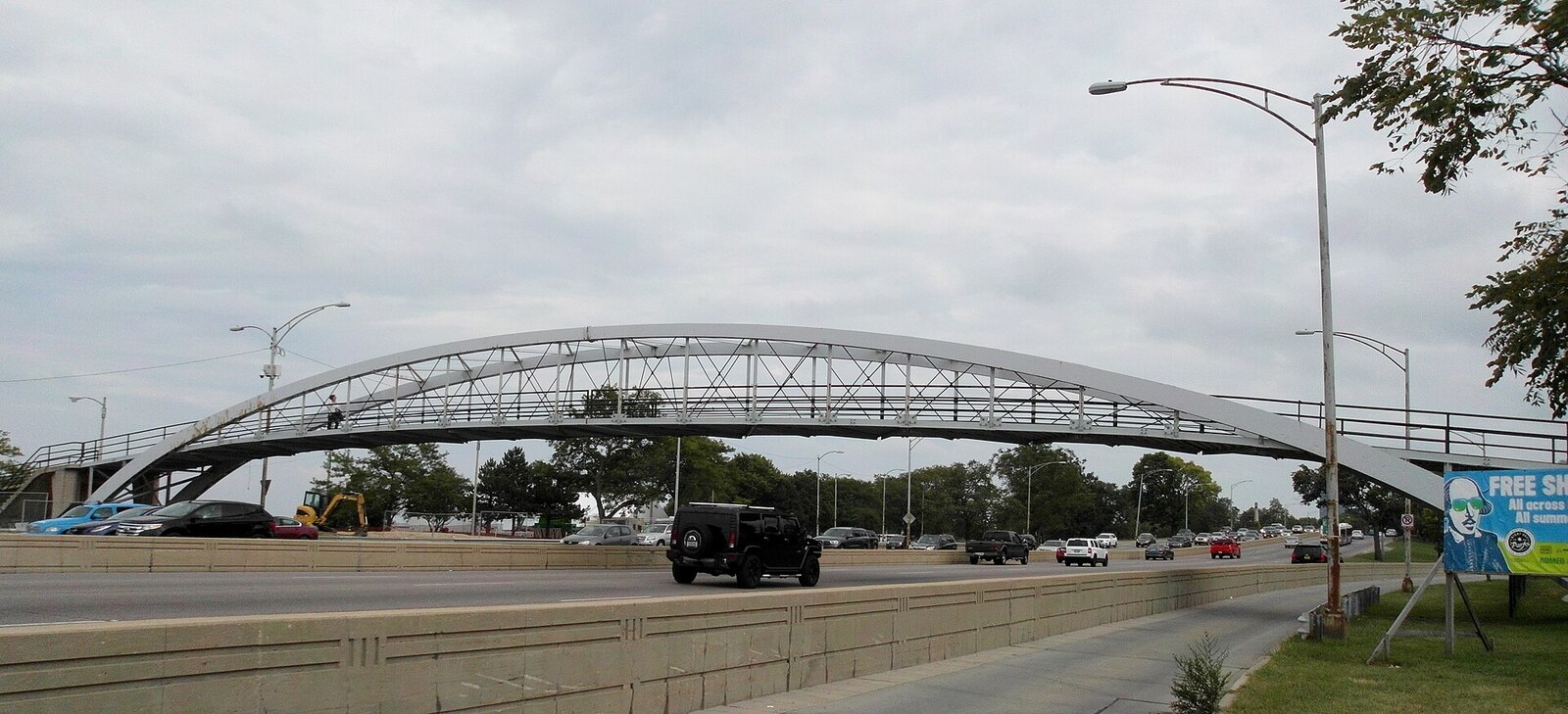
The Lincoln Park Passerelle is completed as part of the transformation of Lake Shore Drive. Its slender welded-steel arch later appears in the Museum of Modern Art’s Built in USA exhibition.
The current State Street Bridge is dedicated after a replacement project delayed by subway construction and wartime shortages. Its Bataan–Corregidor Memorial name honors Chicagoans captured after the fall of Corregidor during World War II.
The present 95th Street Bridge opens on June 27, replacing an earlier bascule. Its six lanes and greater clearance serve the industrial river long before The Blues Brothers makes its opening leaves famous.
The Columbus Drive Bridge opens on October 31 between Michigan Avenue and Lake Shore Drive. Modern steel design places its structural supports below the roadway, preserving an open view along the river.
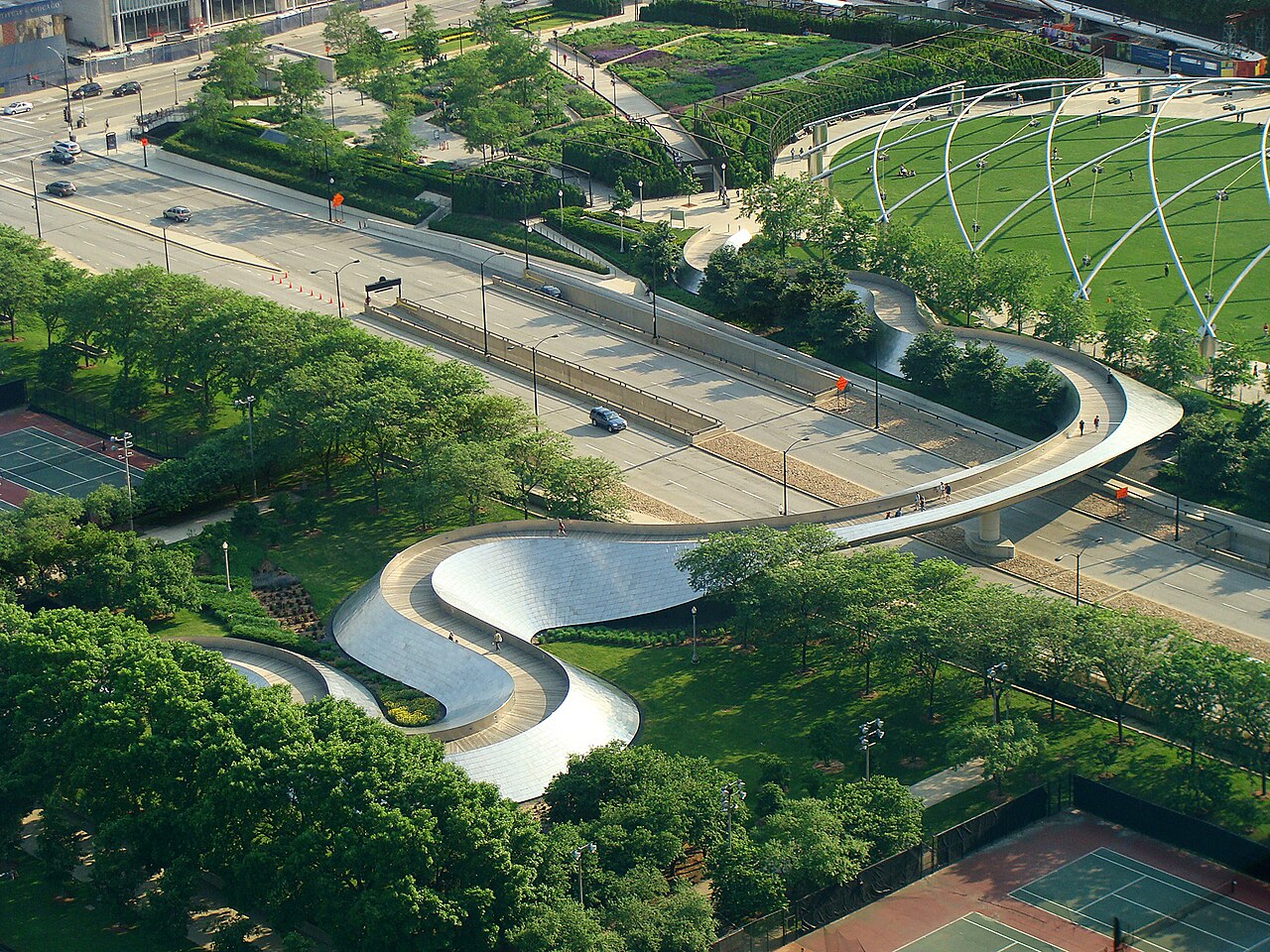
The stainless-steel BP Bridge opens over Columbus Drive in Millennium Park. It is the first completed bridge by Frank Gehry, whose winding design connects the park to the lakefront parkland beyond.
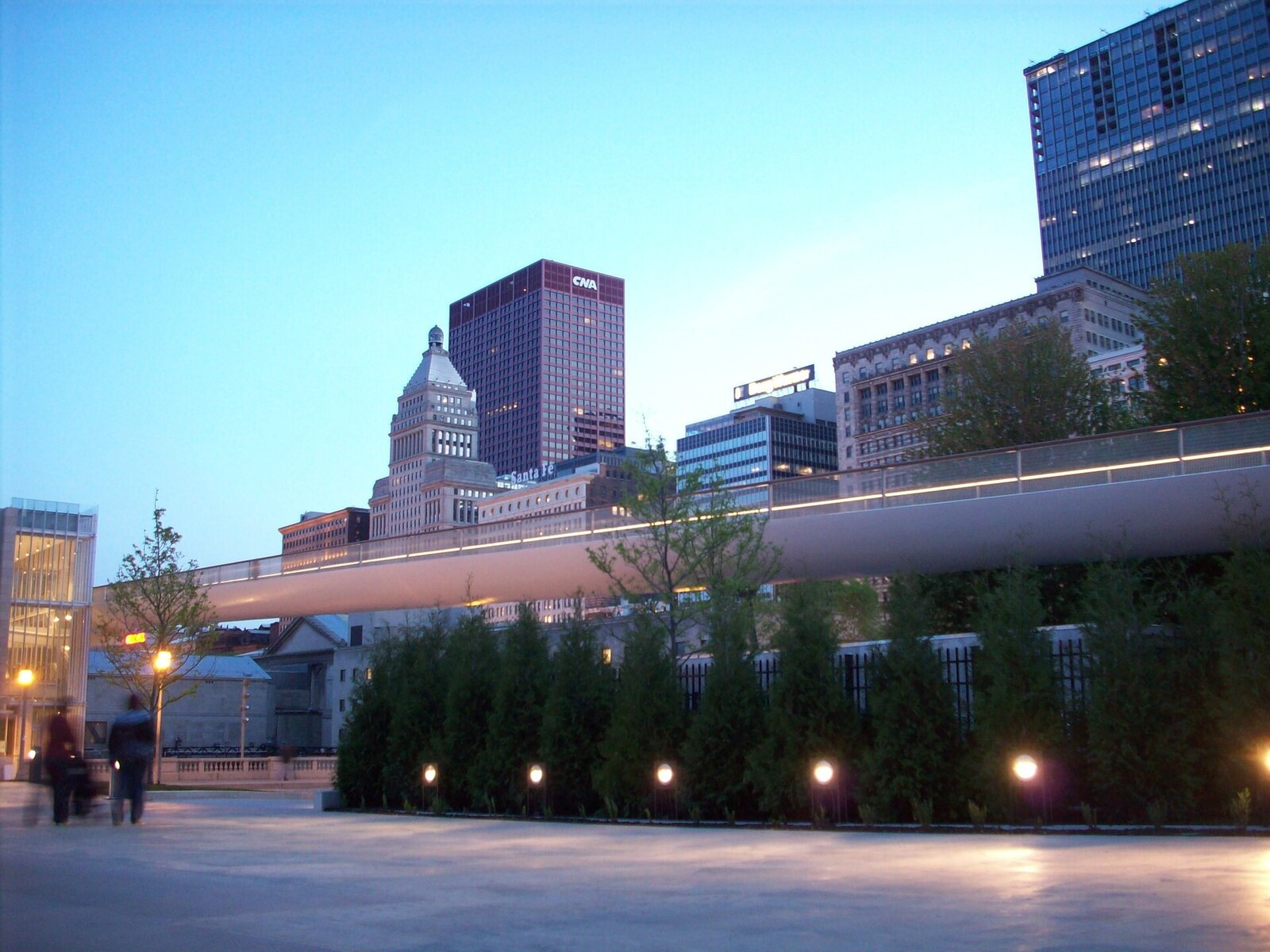
Renzo Piano’s Nichols Bridgeway connects Millennium Park with the Art Institute’s new Modern Wing. Its long white span crosses Monroe Street and rises toward the museum terrace.
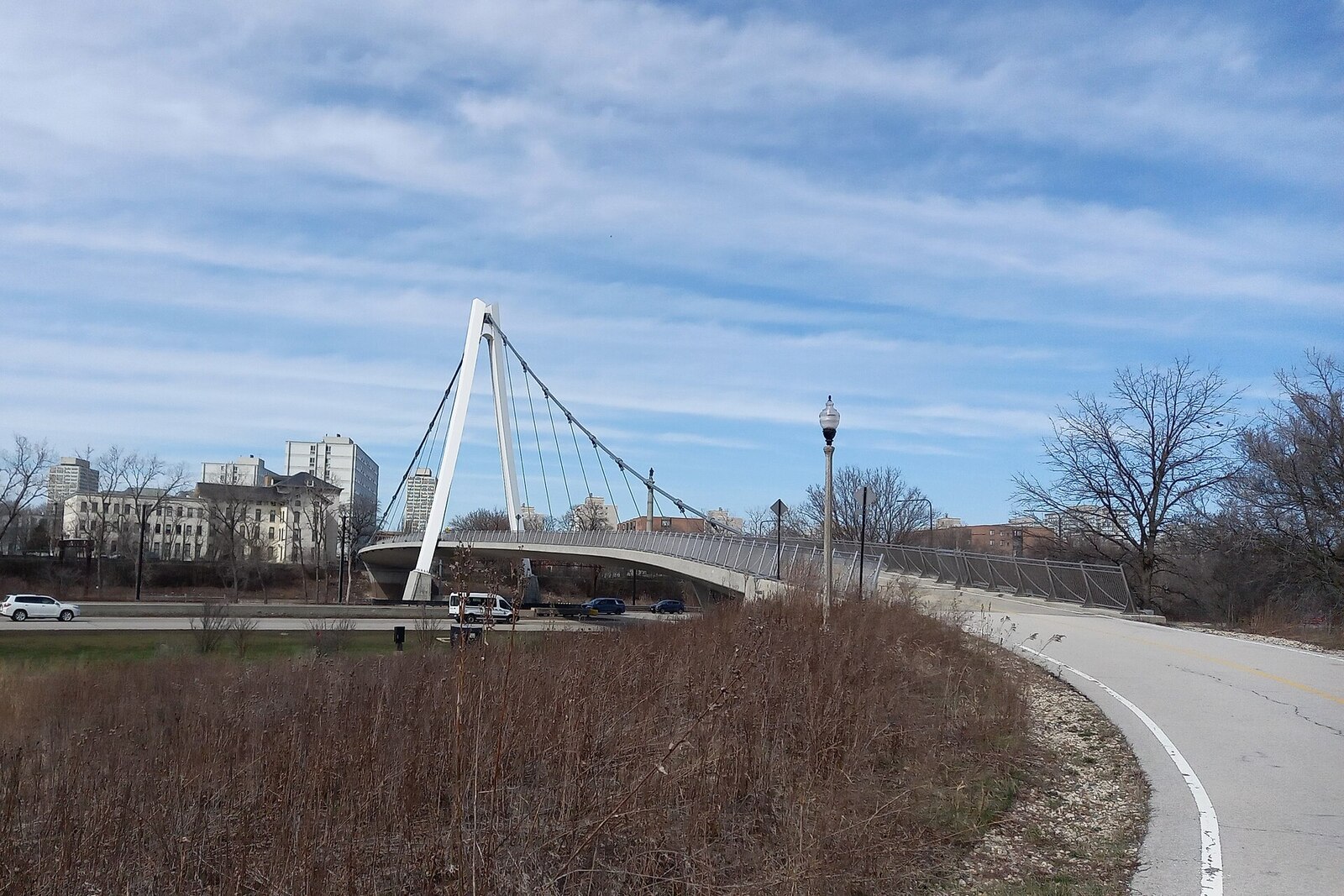
The 35th Street Pedestrian Bridge opens over Lake Shore Drive and the railway tracks. A single cable and tall central pylon support a concrete deck that curves in a reverse S.
The 41st Street Pedestrian Bridge opens in December, connecting Bronzeville with the lakefront. Its sweeping ramps carry walkers, cyclists and wheelchair users over the road and railway.
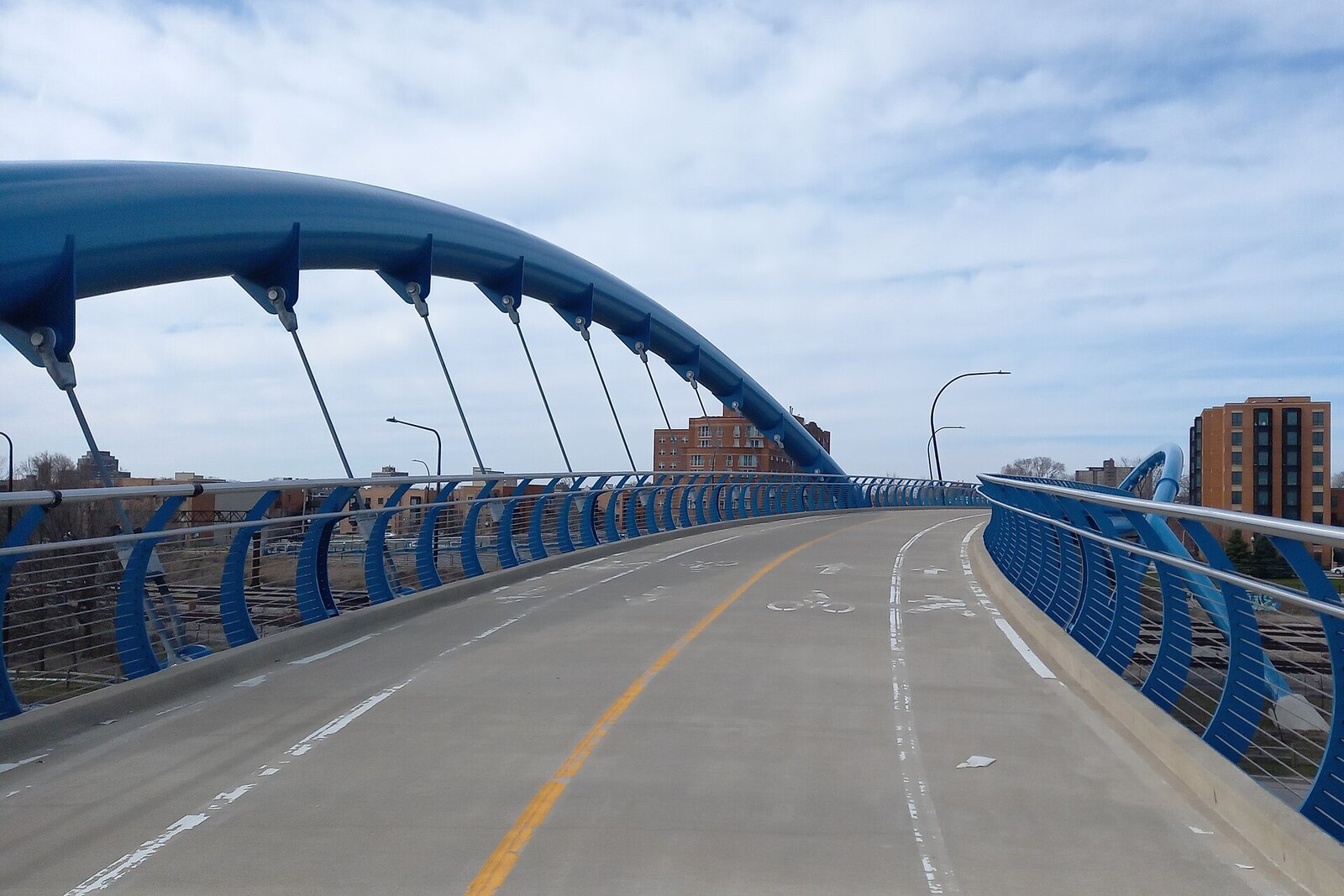
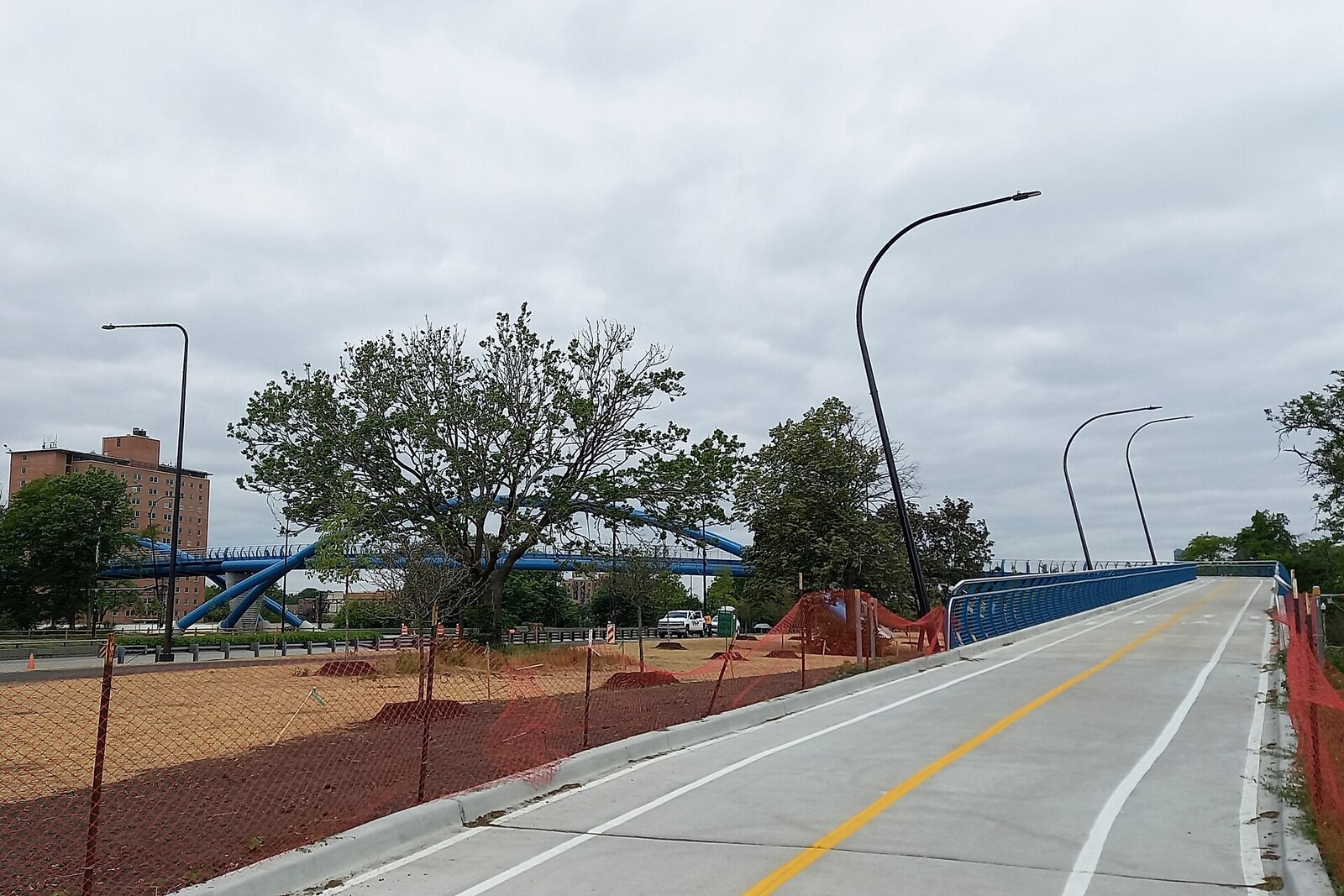
The replacement 43rd Street Pedestrian Bridge opens with curved ramps and inclined blue arches. It provides an accessible route across Lake Shore Drive and six railway tracks to the Lakefront Trail.