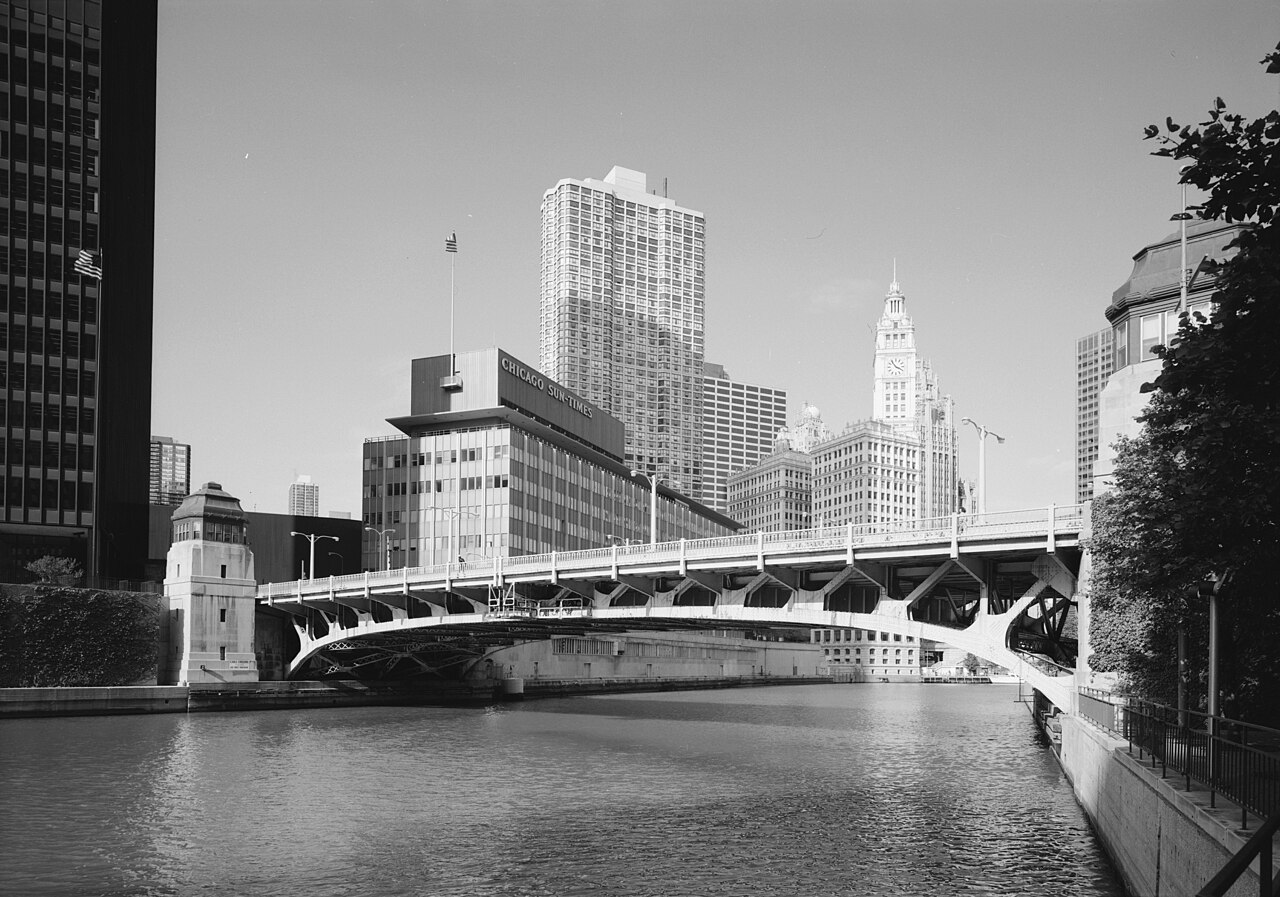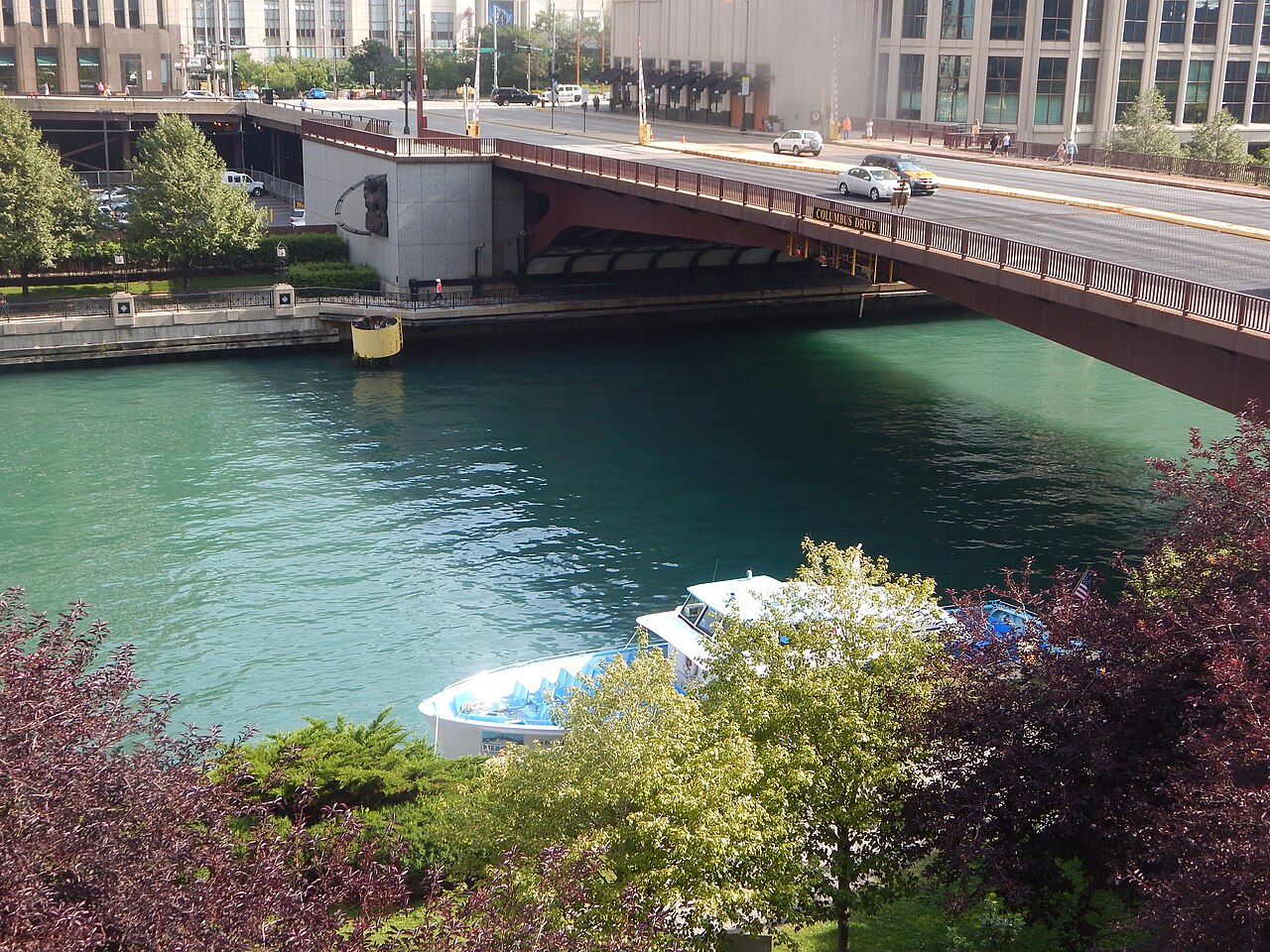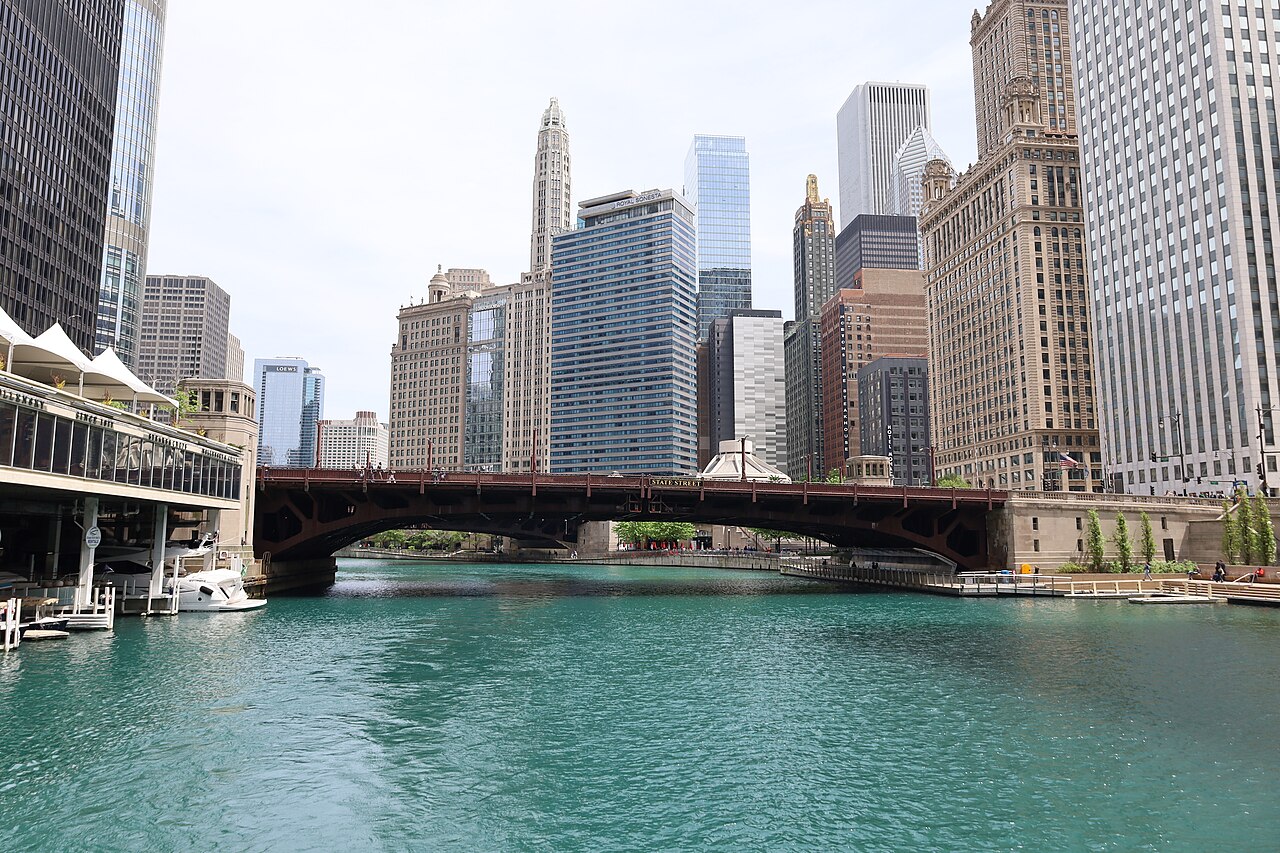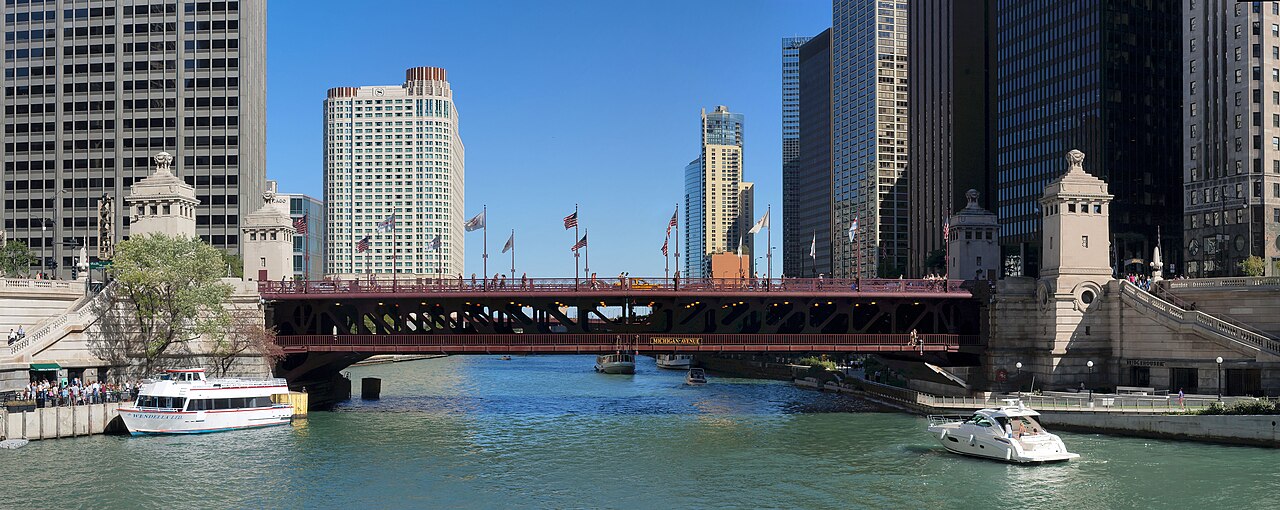
A first visit can begin here and unfold westward, one crossing at a time. Step away from the rush of Michigan Avenue and the bridge becomes a small city in itself: steel, stone, sculpture, movement, and the river beneath.
History
Opened on May 14, 1920, the Michigan Avenue crossing brought a monumental boulevard connection to the river. Engineers Thomas Pihlfeldt and Hugh Young worked with architect Edward Bennett. In 2010 the bridge was named for Jean Baptiste Pointe DuSable, Chicago’s first permanent non-Indigenous settler. Its southwest tower became the Bridgehouse Museum in 2006.
How it works
This double-deck bascule carries roadways at two levels. The crossing is also divided into parallel structures, allowing its sides to move separately. Counterweights balance the leaves around fixed pivots; most of this machinery is hidden behind the riverbank architecture.
What to notice
- The sculptural reliefs on all four bridgehouses
- The two decks seen from the Riverwalk
- The museum entrance at the southwest tower