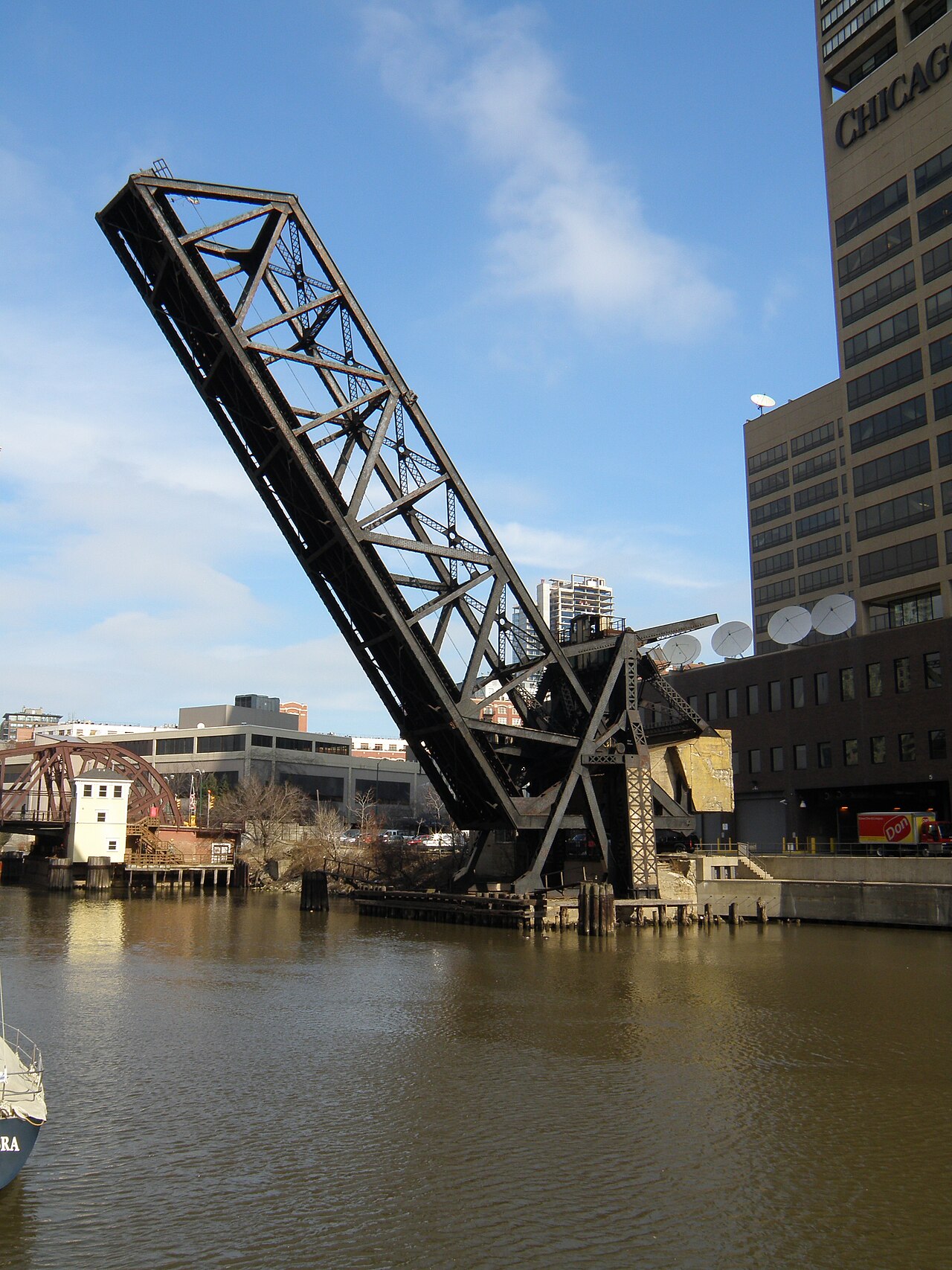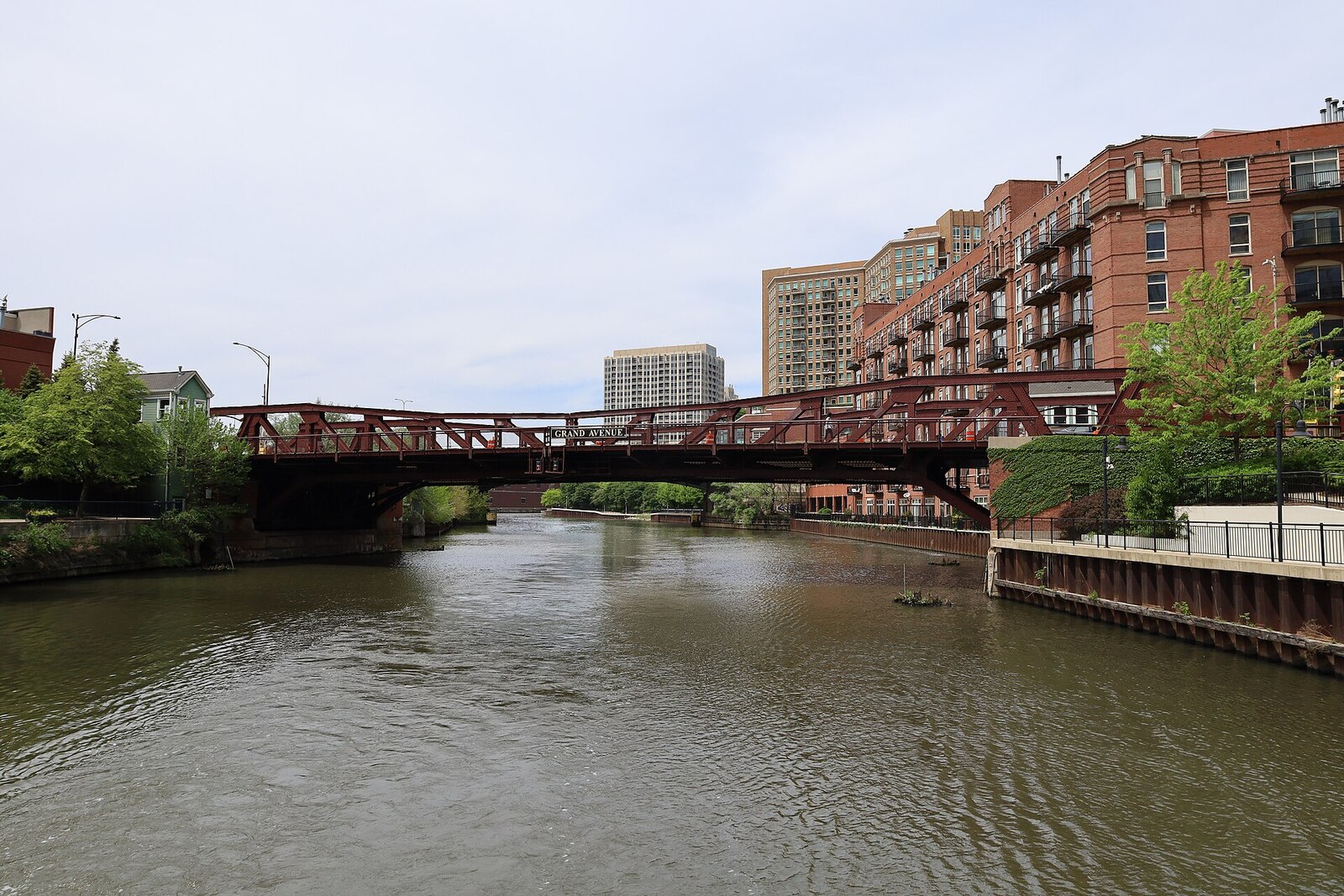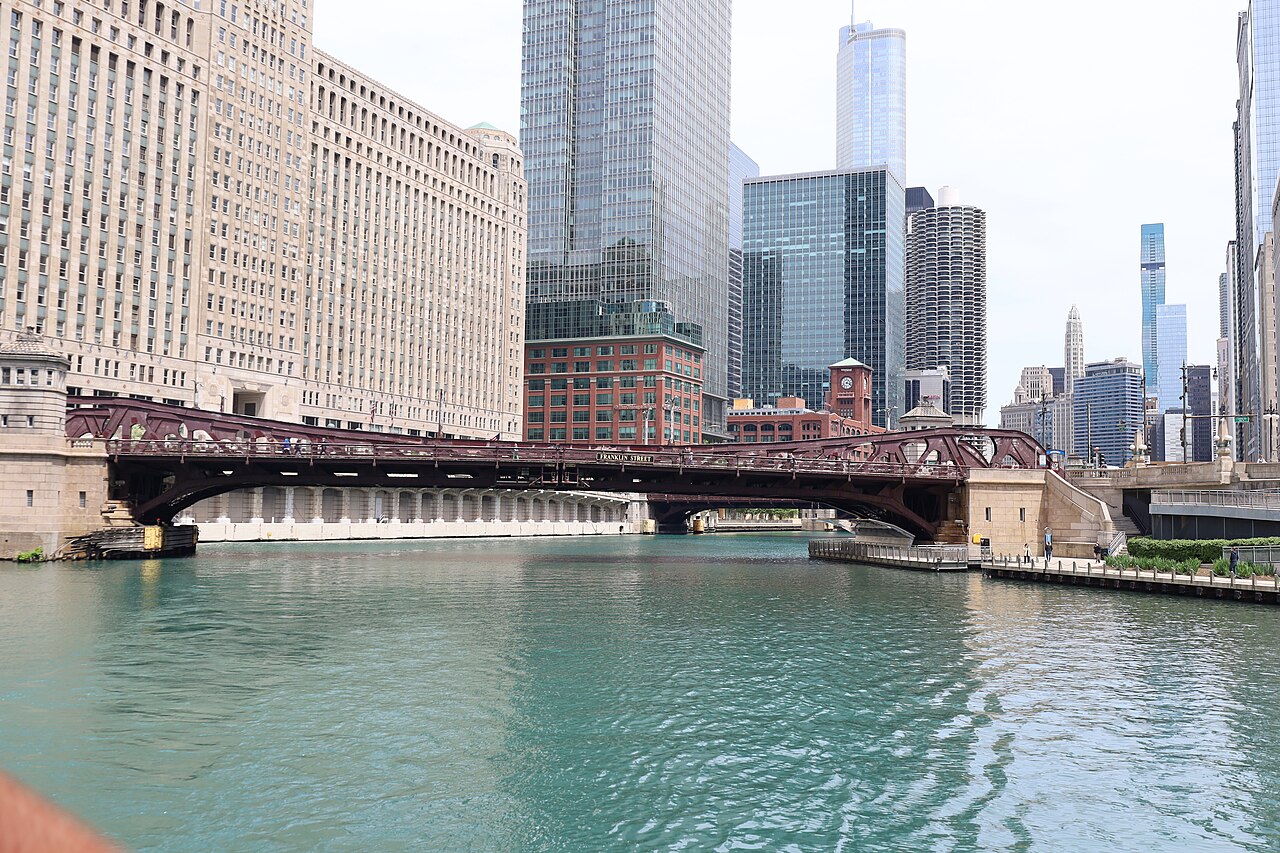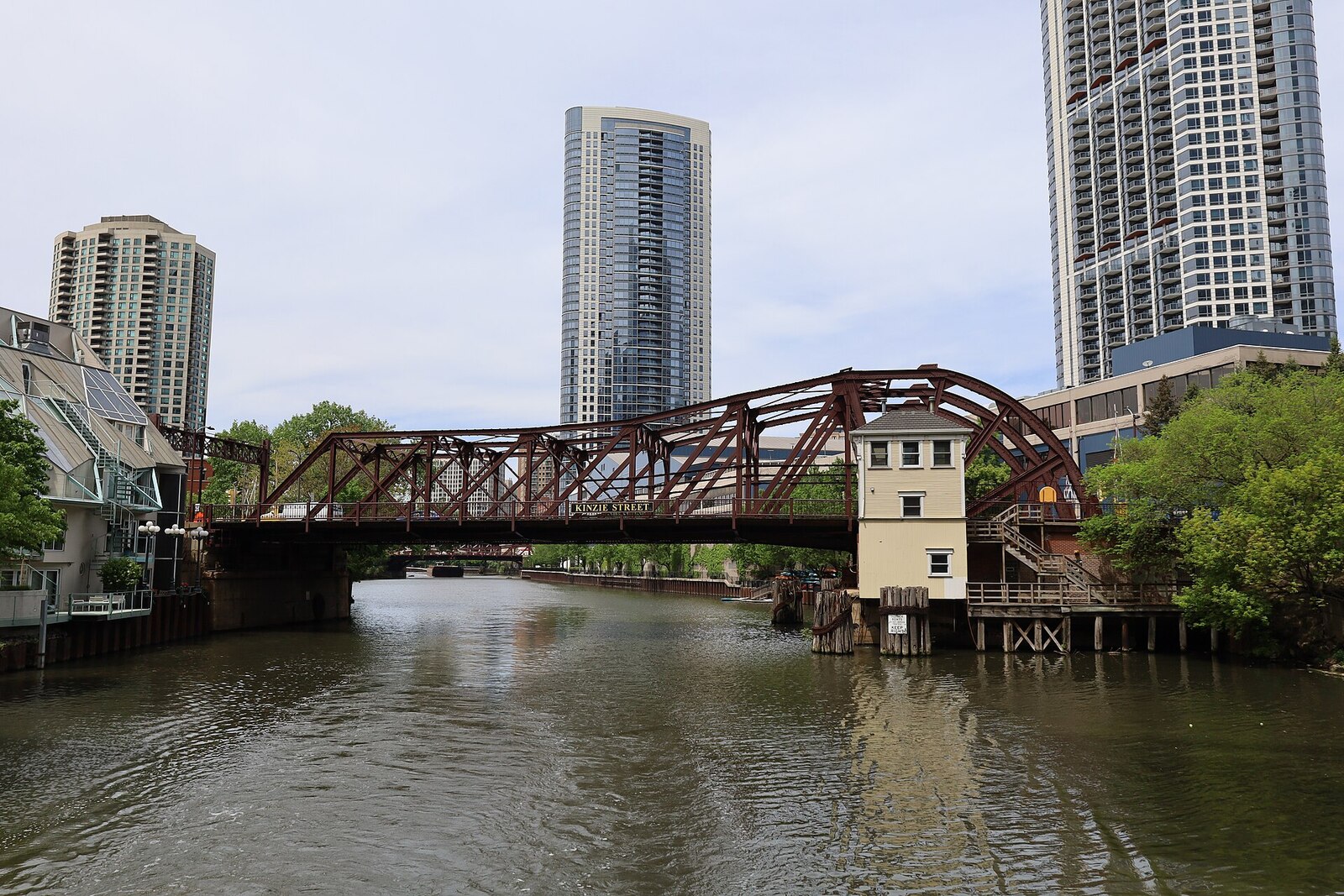
Two bridges share the Kinzie Street name and a small stretch of river, but they are separate structures. This is the road crossing, with a high steel truss around the roadway. The neighboring railroad bridge is the dramatic raised span. Seen together, they show how the demands of streets and railways produced different answers at almost the same location.
History
The current road bridge opened in 1909, replacing earlier crossings at one of the river’s oldest bridge sites. It belongs to the first generation of Chicago’s fixed-trunnion bascules, before later downtown bridges acquired their more restrained profiles and formal masonry bridgehouses. Its conspicuous steelwork preserves an earlier industrial character within a rapidly changed North Branch setting.
How it works
A single leaf rotates around a fixed horizontal axle to open the channel. The tall through-truss gives the bridge its characteristic hump-backed outline; traffic passes between the steel sides. Visible gear racks make the working mechanism easier to recognize than on bridges whose machinery is mostly concealed below the roadway. Looking at the truss, pivot end, and bridgehouse together helps separate the moving leaf from the fixed parts of the crossing.
What to notice
- The hump-backed truss around the road
- The exposed curved gear rack
- The separate raised railroad bridge just to the south