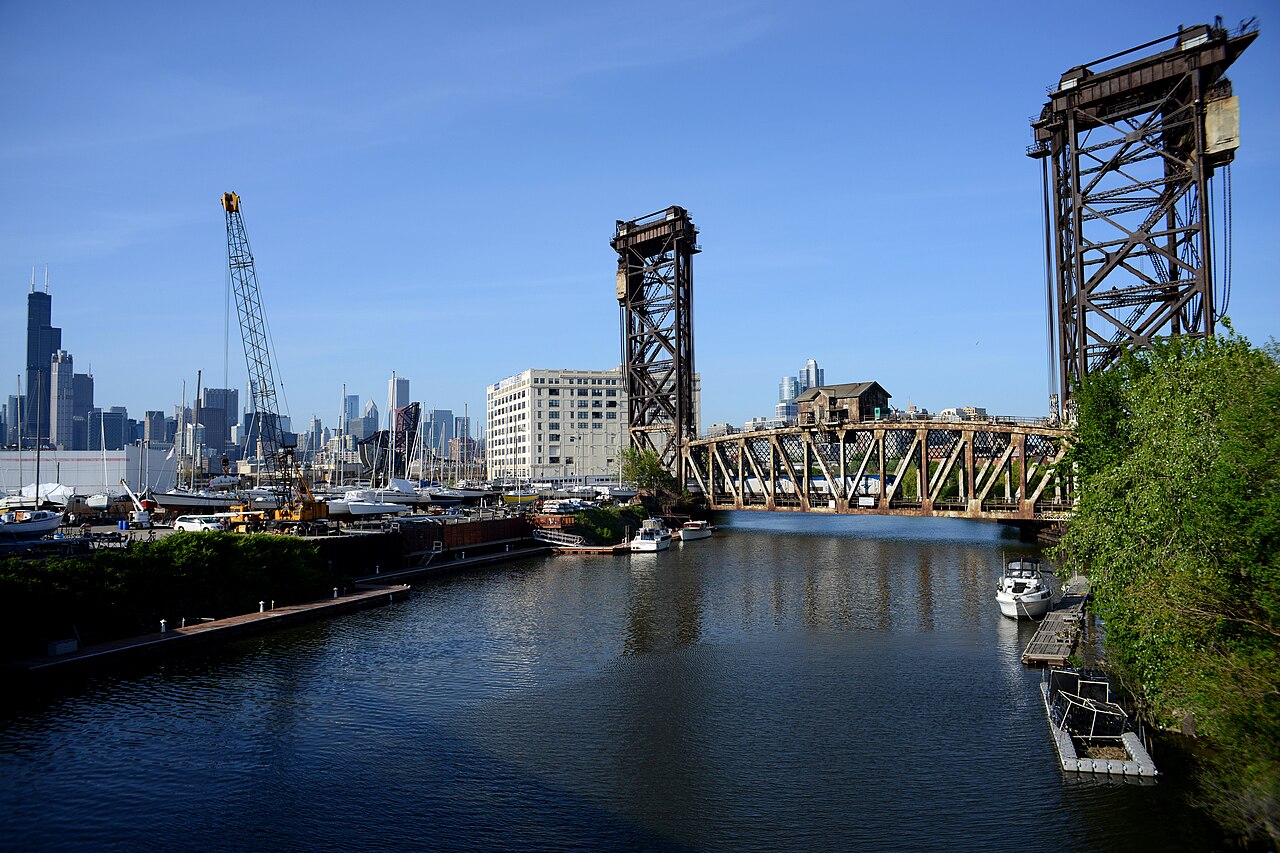
The silhouette gives the mechanism away. Before reading any technical explanation, imagine where the central span could move and which parts would remain still.
History
Constructed in 1913–1914 for the Pennsylvania Railroad, the crossing is also known as the 21st Street Bridge. Waddell & Harrington designed the lifting system. Its railway purpose sets it apart from the road bridges that dominate the downtown collection.
How it works
The central span remains level while lifting between its towers. Counterweights help balance the movement. Unlike a bascule, the raised deck still occupies space above the channel, so its highest position determines the available clearance. This is a working railway bridge, viewed from public riverside areas rather than crossed on foot.
What to notice
- The pair of lift towers
- The level central span
- The railway approaches