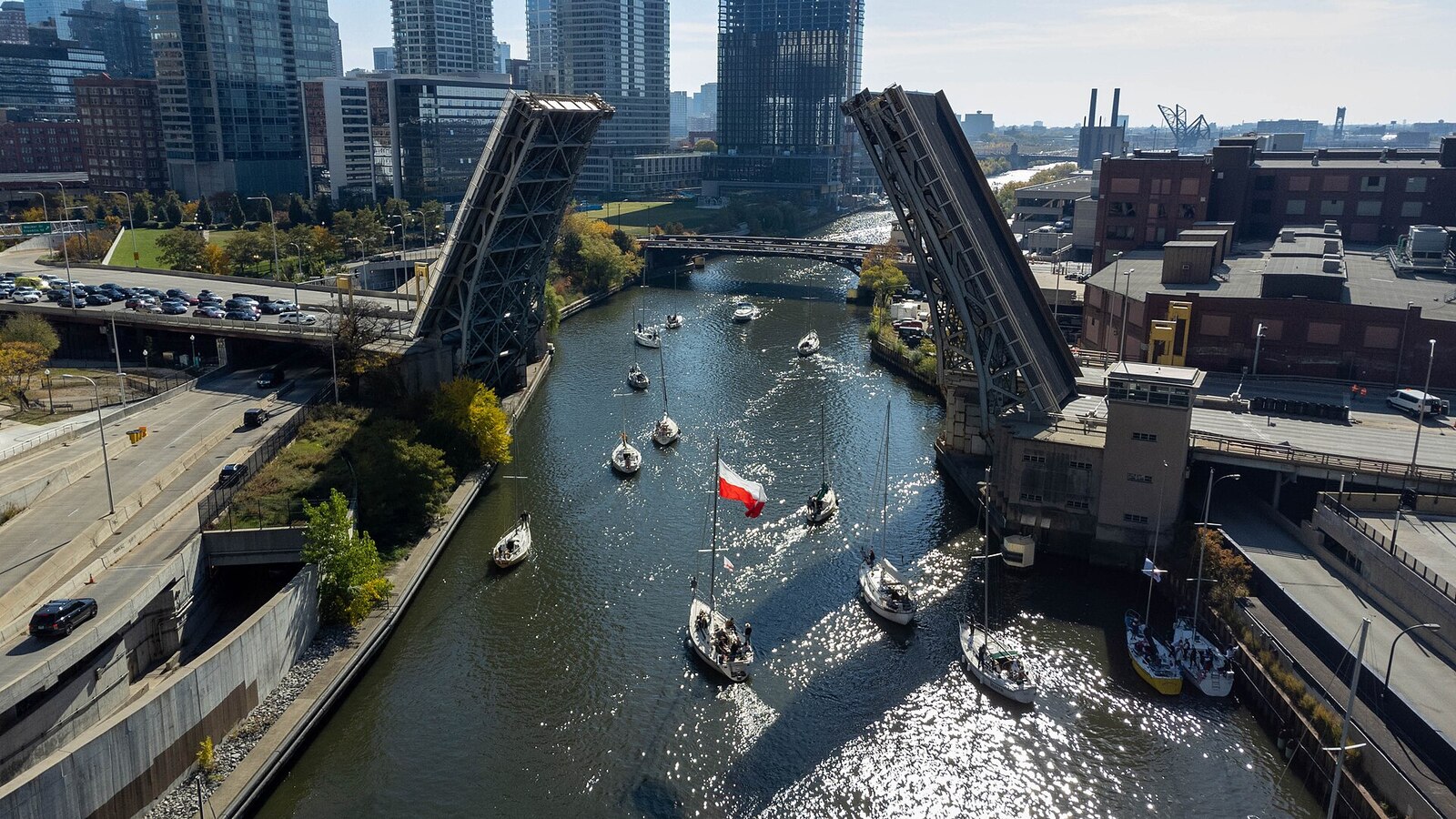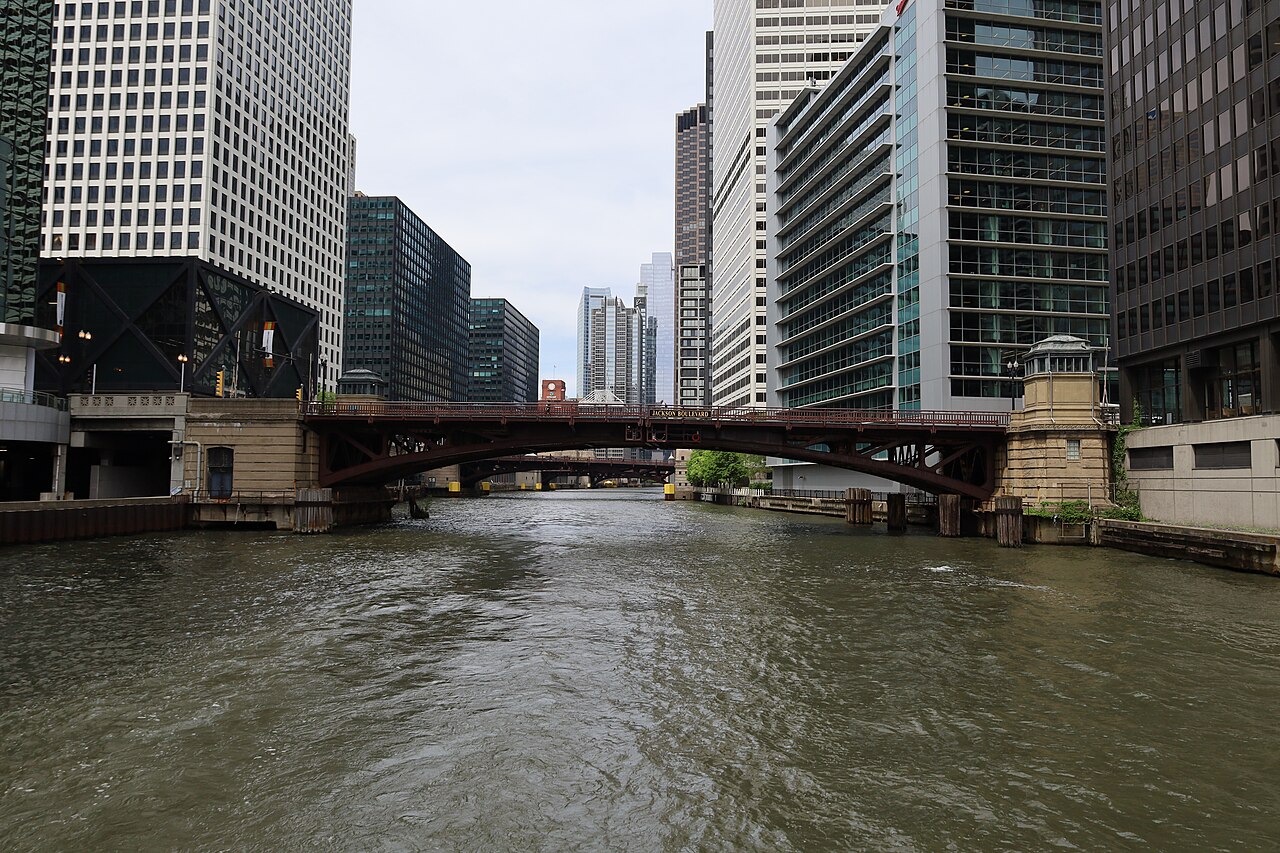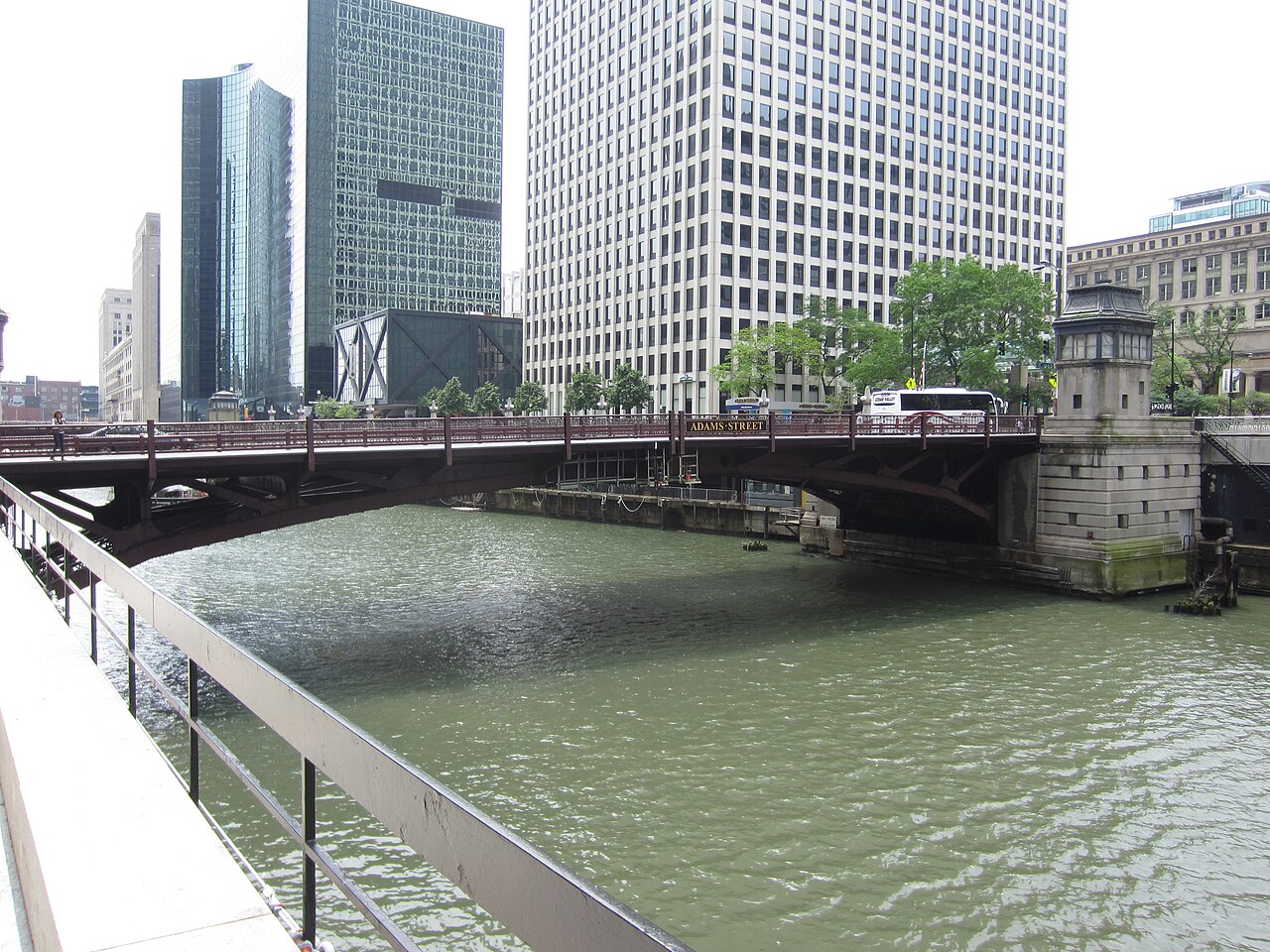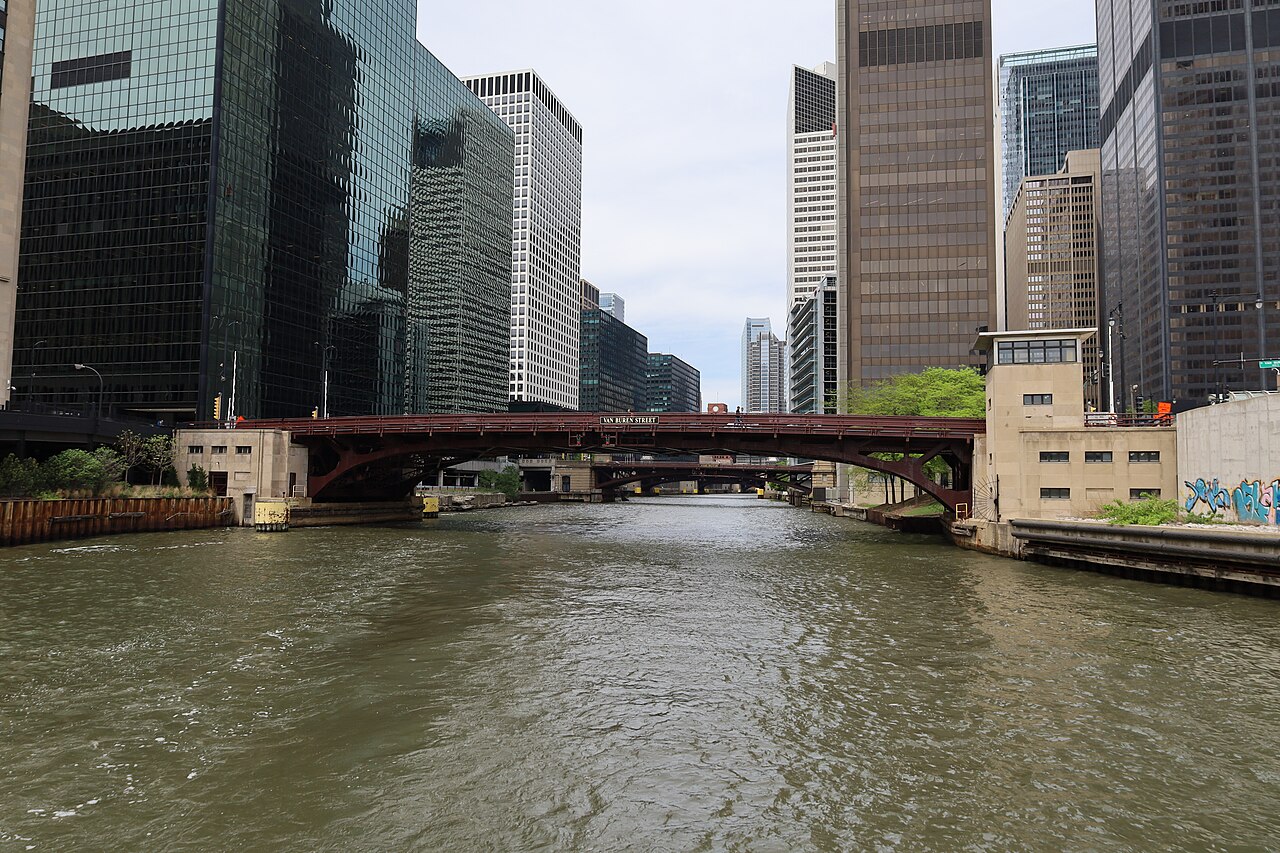
The atlas’s downtown core ends here, but the river does not. This is a useful place to decide whether to turn back through the Loop or save the industrial bridges farther south for another day.
History
A floating crossing appeared in 1849, followed by swing bridges and an early Scherzer rolling-lift bridge in the 1890s. The present structure replaced that rolling lift in December 1956. The sequence reflects a century of changing ideas about how to share a river.
How it works
The current bridge is a single-deck bascule with rail-height trusses and one bridgehouse on the southeast corner. Its restrained architectural treatment contrasts with the more ceremonially detailed crossings from the 1910s and 1920s.
What to notice
- The single southeast bridgehouse
- The low steel profile beside the roadway
- The changing scale of the South Branch beyond downtown