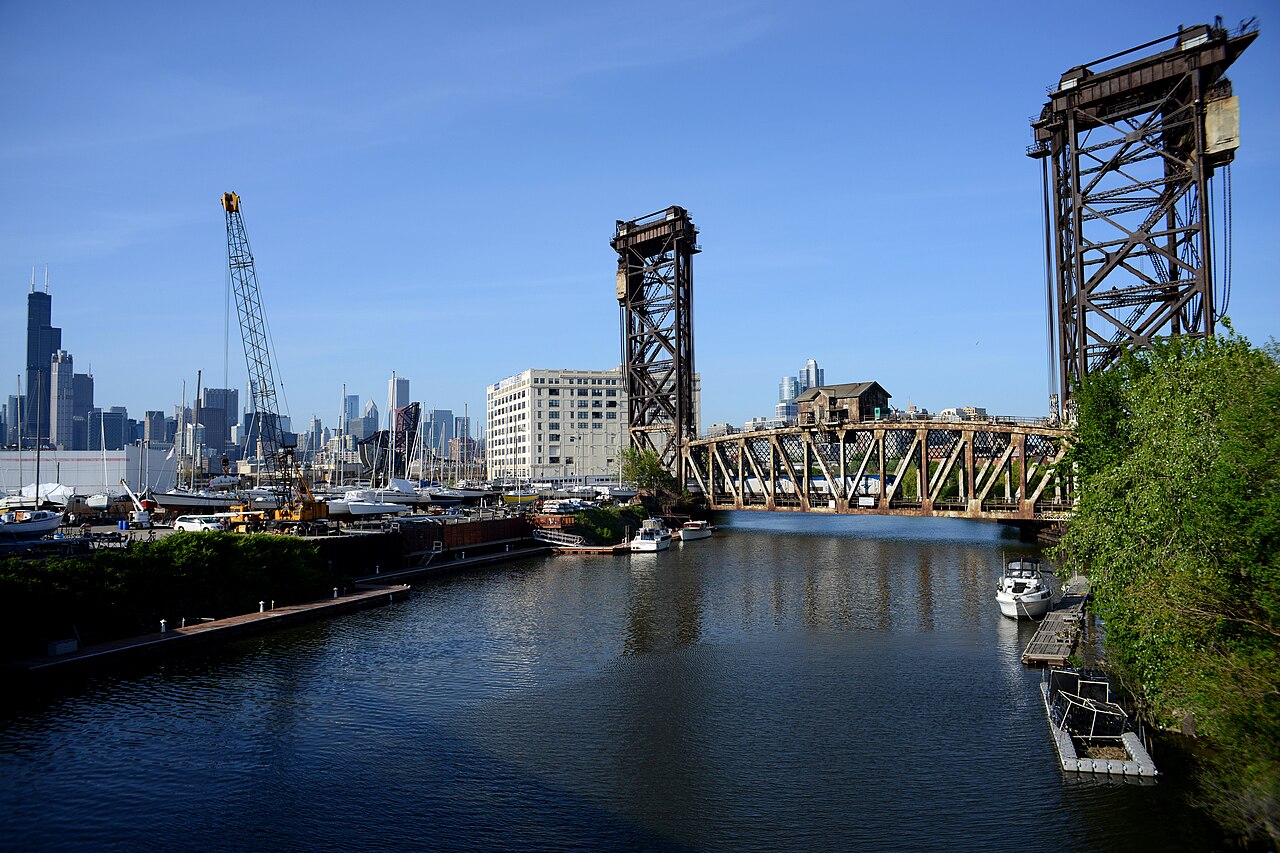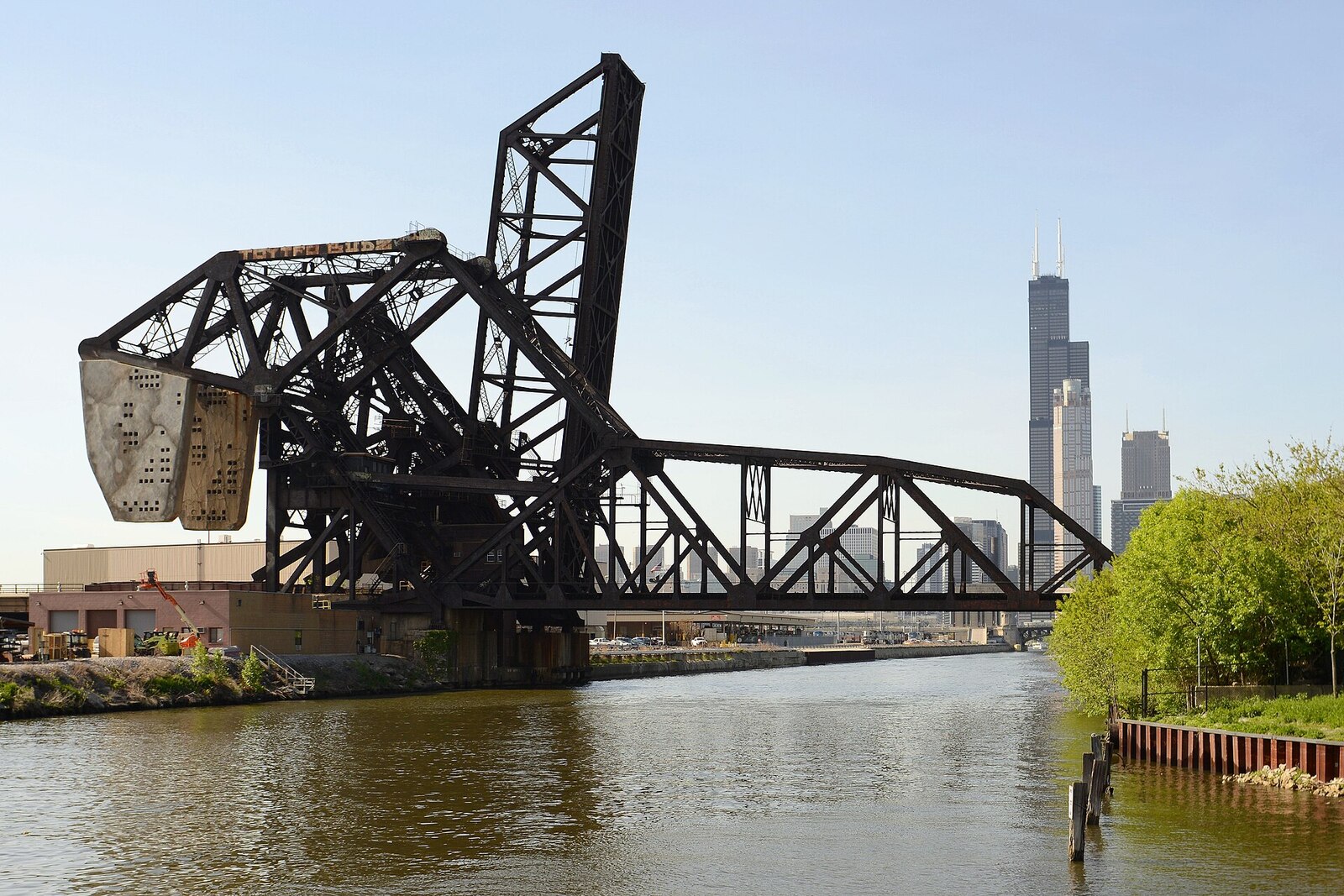
The St. Charles Air Line Bridge belongs to a dramatic pair of railroad structures near the South Branch’s bend. In the photograph, it is the lowered crossing behind the permanently raised neighboring B&O bridge. The two are easily confused. The Air Line’s great steel truss and concrete counterweight reward attention in their own right, even against the neighboring span’s spectacular silhouette.
History
Built in 1917–1919 to a design by Joseph B. Strauss, the bridge originally crossed the river on a different alignment. When Chicago straightened this part of the South Branch, the bridge was moved to its present site in 1930. The crossing makes that large change to the city’s geography tangible: the railway had to adapt to a river being reshaped around it. Chicago designated the bridge a landmark in 2007.
Built in 1917–1919; moved to the present crossing in 1930.
How it works
The Strauss heel-trunnion system raises a single truss span, using an overhead counterweight and articulated supporting framework to balance the movement. The concrete mass is a working component rather than simply a bulky support. This arrangement differs visibly from the largely concealed counterweights of downtown road bascules. The railway structure is a landmark to observe from public surroundings; its tracks and machinery are not a pedestrian route.
What to notice
- The lowered Air Line span behind the raised neighboring bridge in the photograph
- The large overhead concrete counterweight
- The relationship between the railway alignment and the river bend