The 95th Street Bridge shifts the atlas to a different Chicago river landscape. Here, broad water, industry, and large-scale transportation replace the downtown canyon of towers. Its cinematic connection is an invitation to look more closely: the bridge is both a recognizable film location and part of the infrastructure that serves the Calumet.
History
The current bridge opened in 1958, replacing an early Chicago-type bascule from 1903. That predecessor had followed a swing bridge that collapsed in 1899. The newer crossing provided a wider roadway and greater clearance for river traffic. In 1980, The Blues Brothers gave the bridge a second identity through its celebrated car-jump sequence. The film moment belongs to this Calumet crossing, far south of the downtown bridges often associated with Chicago on screen.
How it works
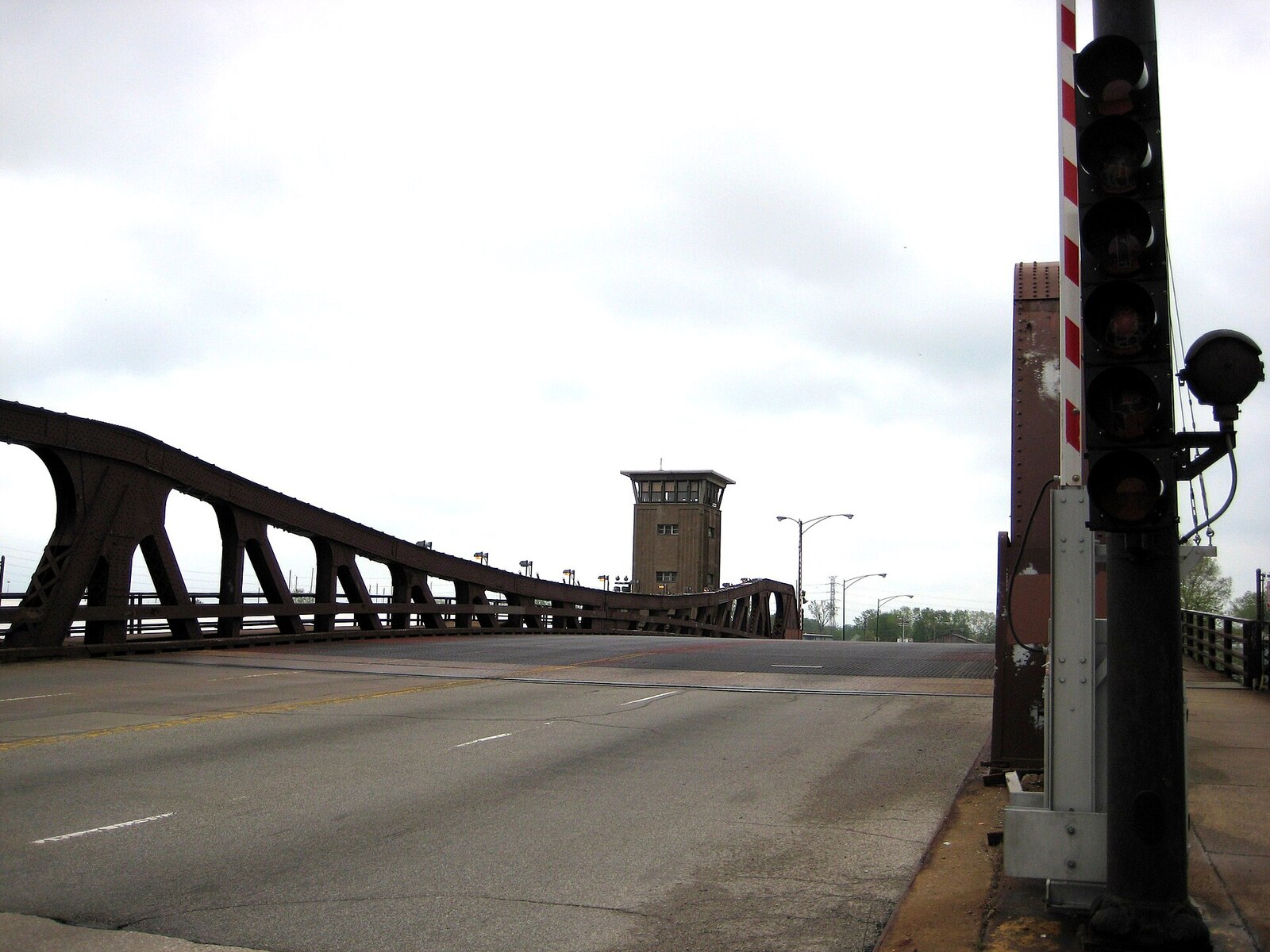
Two counterbalanced leaves rise from opposite banks to clear the channel. The low steel trusses remain visible beside the roadway, while the bridgehouses mark the operating ends. The mechanism is familiar from the Main Stem, but its setting makes the relationship with shipping more apparent. Compare the bridge’s relatively low roadway with the taller railroad lifting structures nearby: each accommodates the river in a different way.
What to notice
- The paired leaves and low roadside trusses
- The bridgehouses beside the broad roadway
- The industrial river setting behind the famous film scene