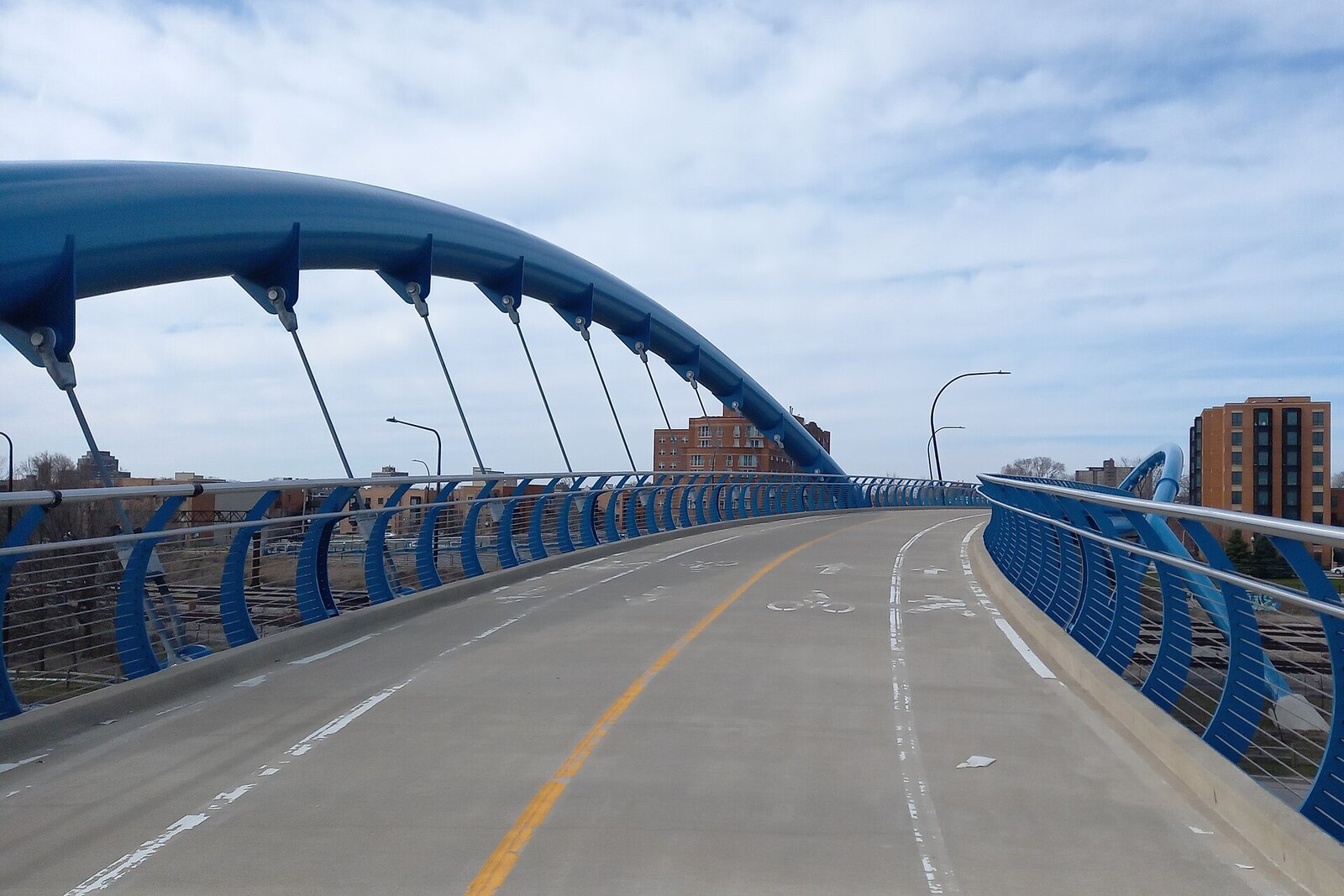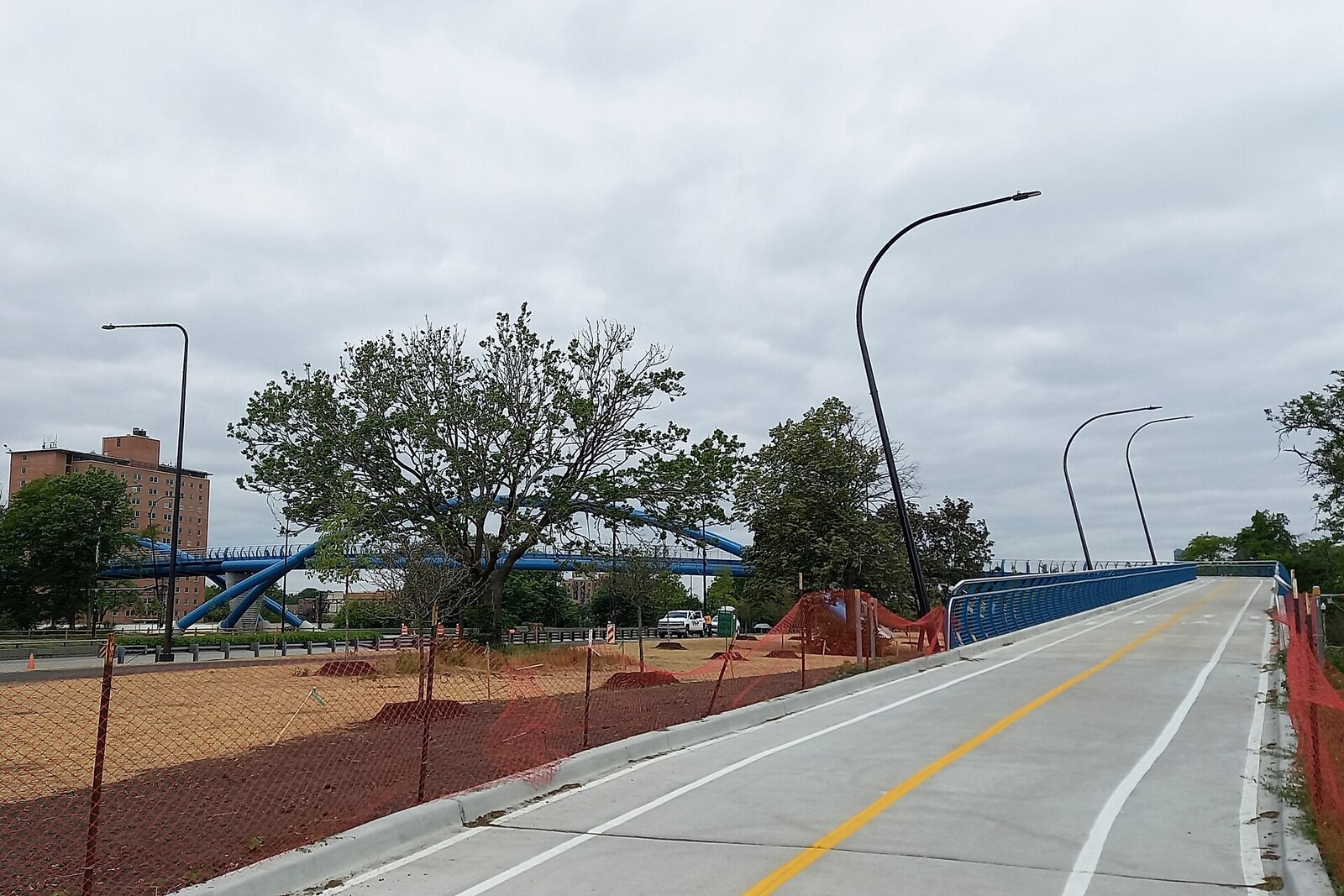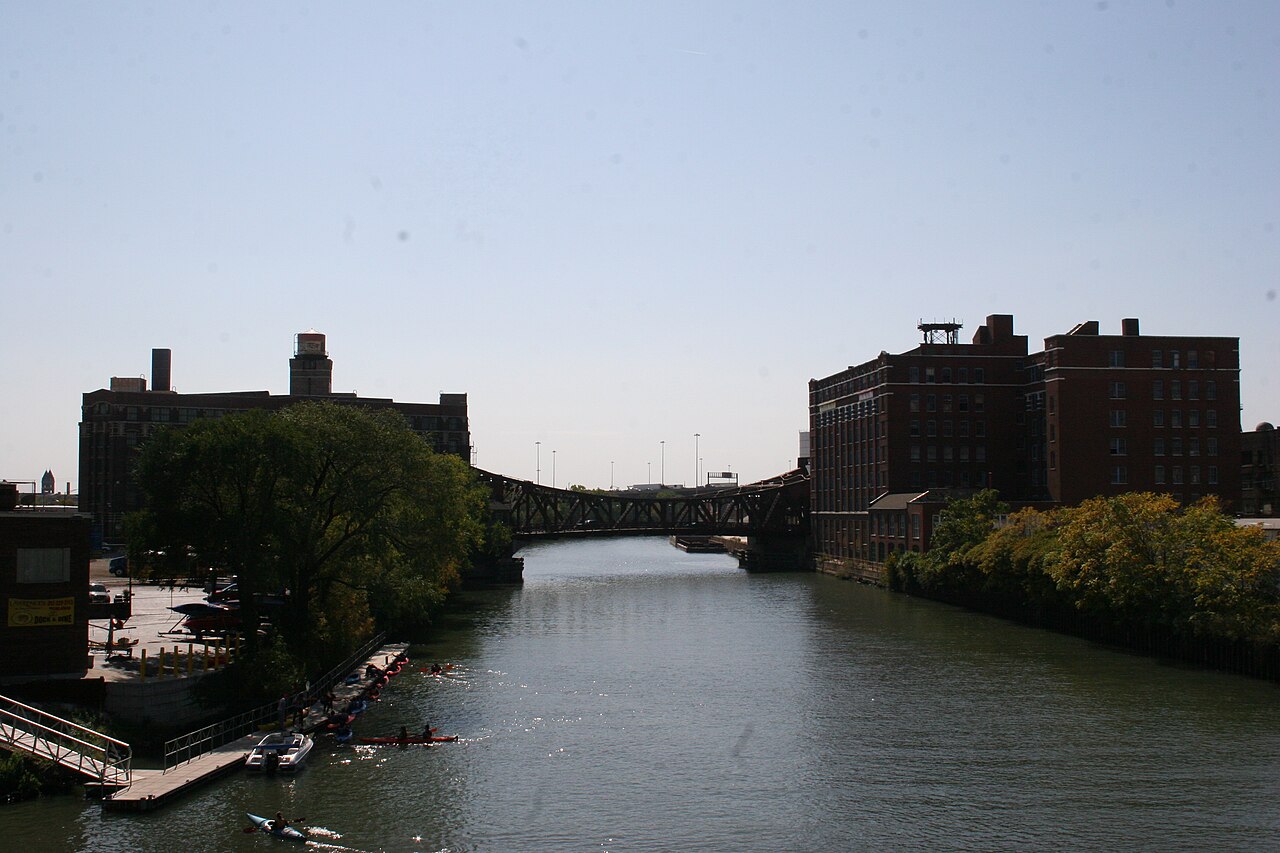
The 35th Street bridge brings suspension-bridge drama to the scale of a neighborhood path. A tall white pylon rises above the road and railway corridor, while the deck follows a reverse-S curve toward the lakefront. Its silhouette is very different from the blue arches at 41st and 43rd Streets: three nearby connections offer three opportunities to see architecture at work in everyday journeys.
History
Opened in 2016, the bridge replaced an older pedestrian crossing as part of the effort to improve connections between Bronzeville and the lakefront. EXP’s design made the structure itself the landmark. The conspicuous pylon, cable, and curving path announce a crossing intended for people on foot and bicycles, in a setting dominated by much larger transportation infrastructure.
How it works
The approximately 620-foot crossing includes a 500-foot main span and a pylon about 120 feet tall. One principal suspension cable supports a hollow, post-tensioned concrete deck. In a self-anchored suspension arrangement, the bridge structure resists the cable’s horizontal pull. Post-tensioning uses tensioned steel to compress the concrete, helping create a slender continuous deck. Its reverse curve adds complexity: the route changes direction while remaining part of one coordinated structural system.
What to notice
- The single main suspension cable
- The white pylon rising above the corridor
- The reverse-S curve of the concrete deck