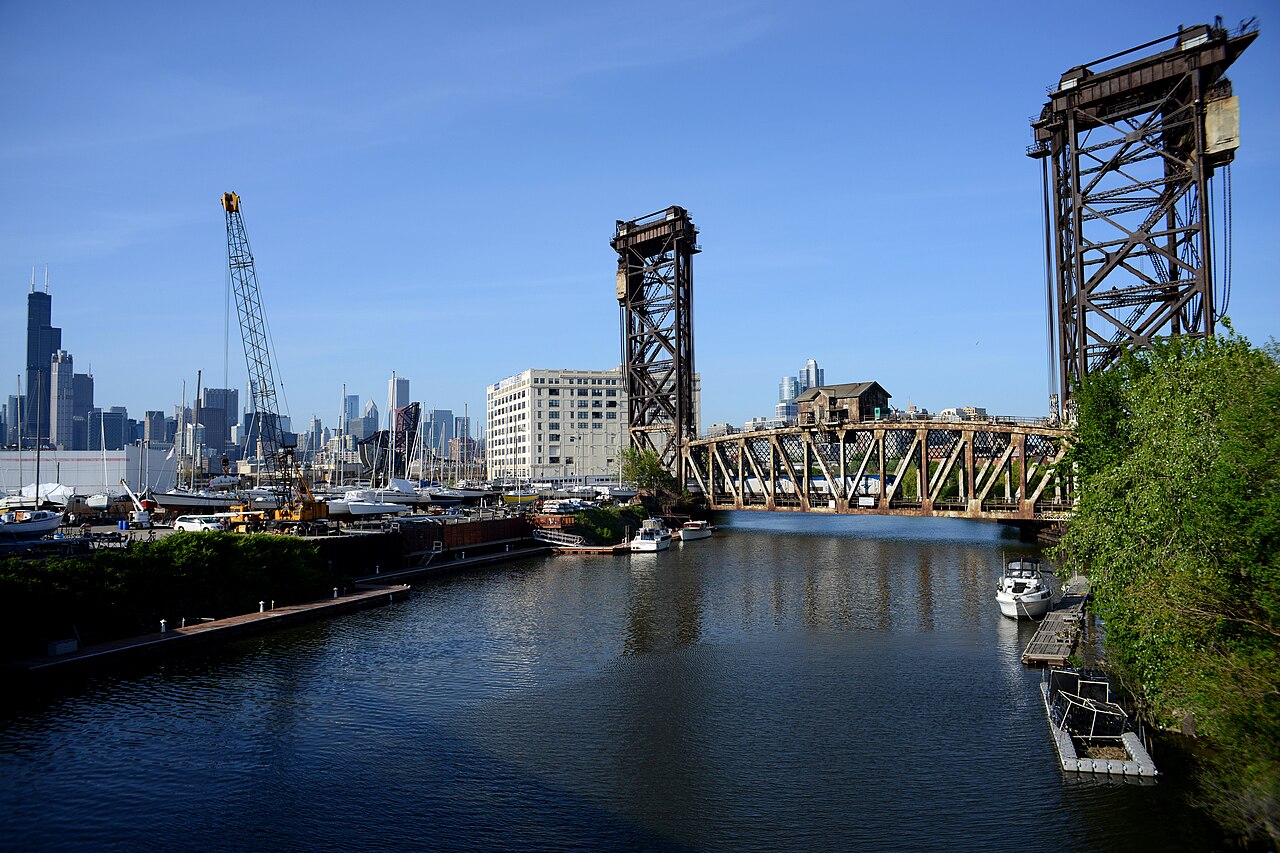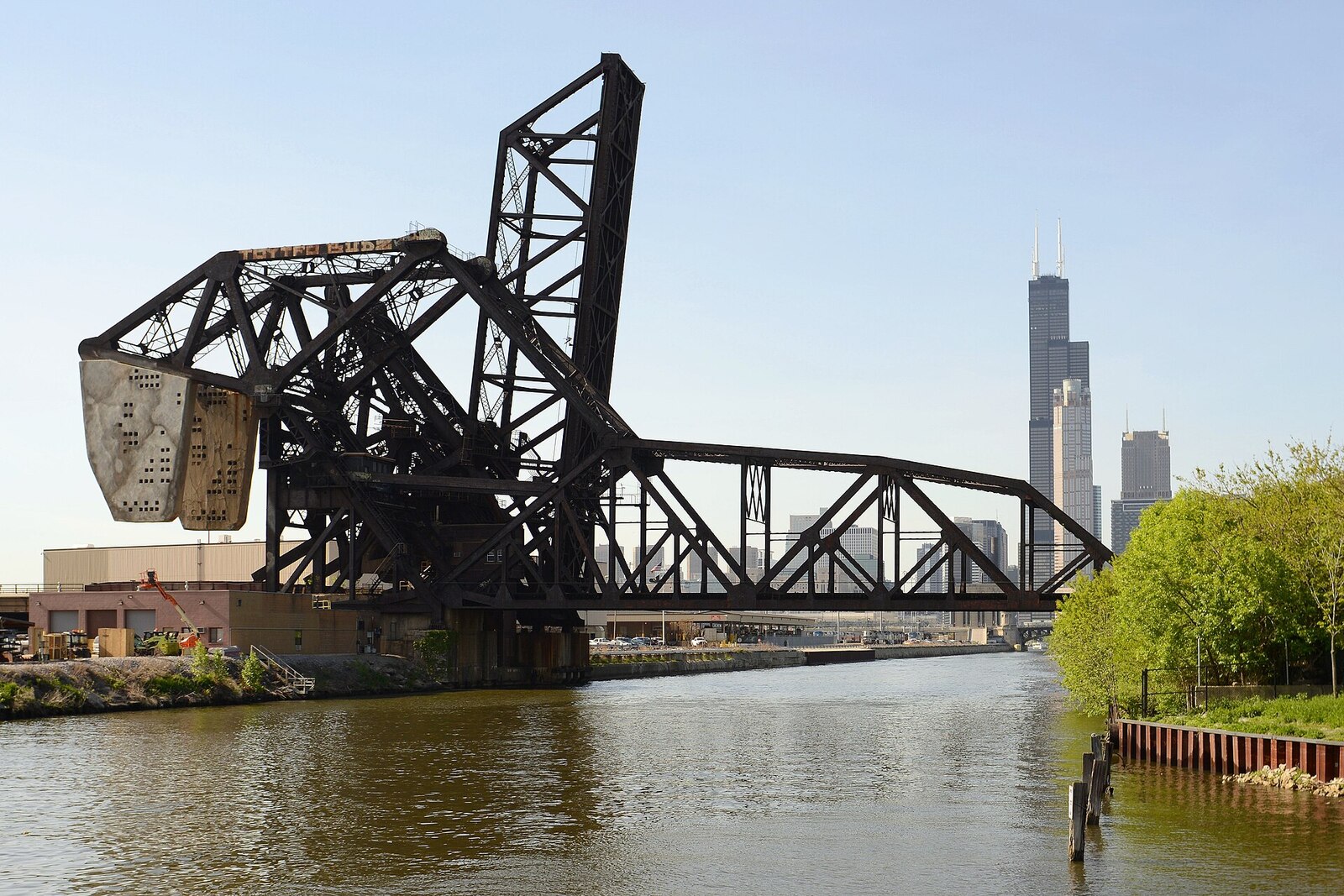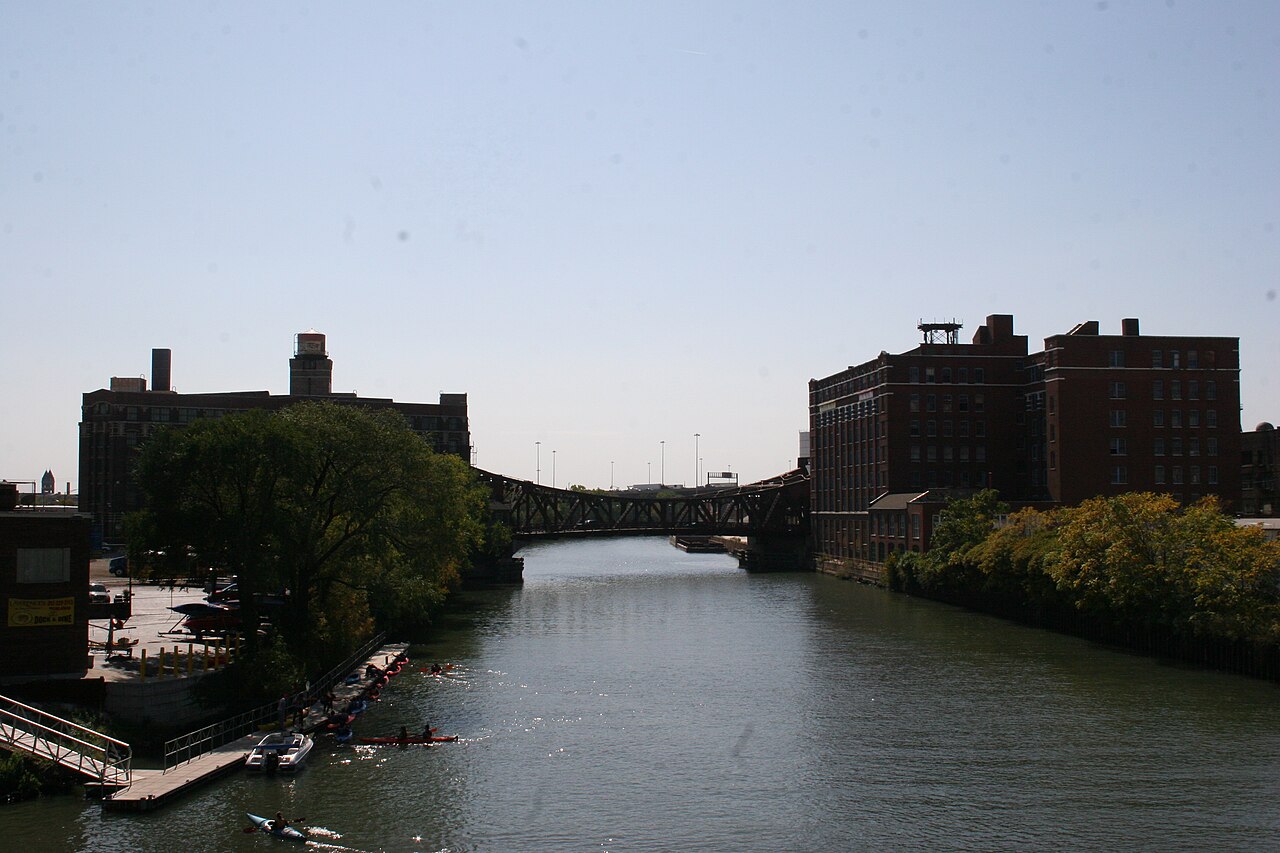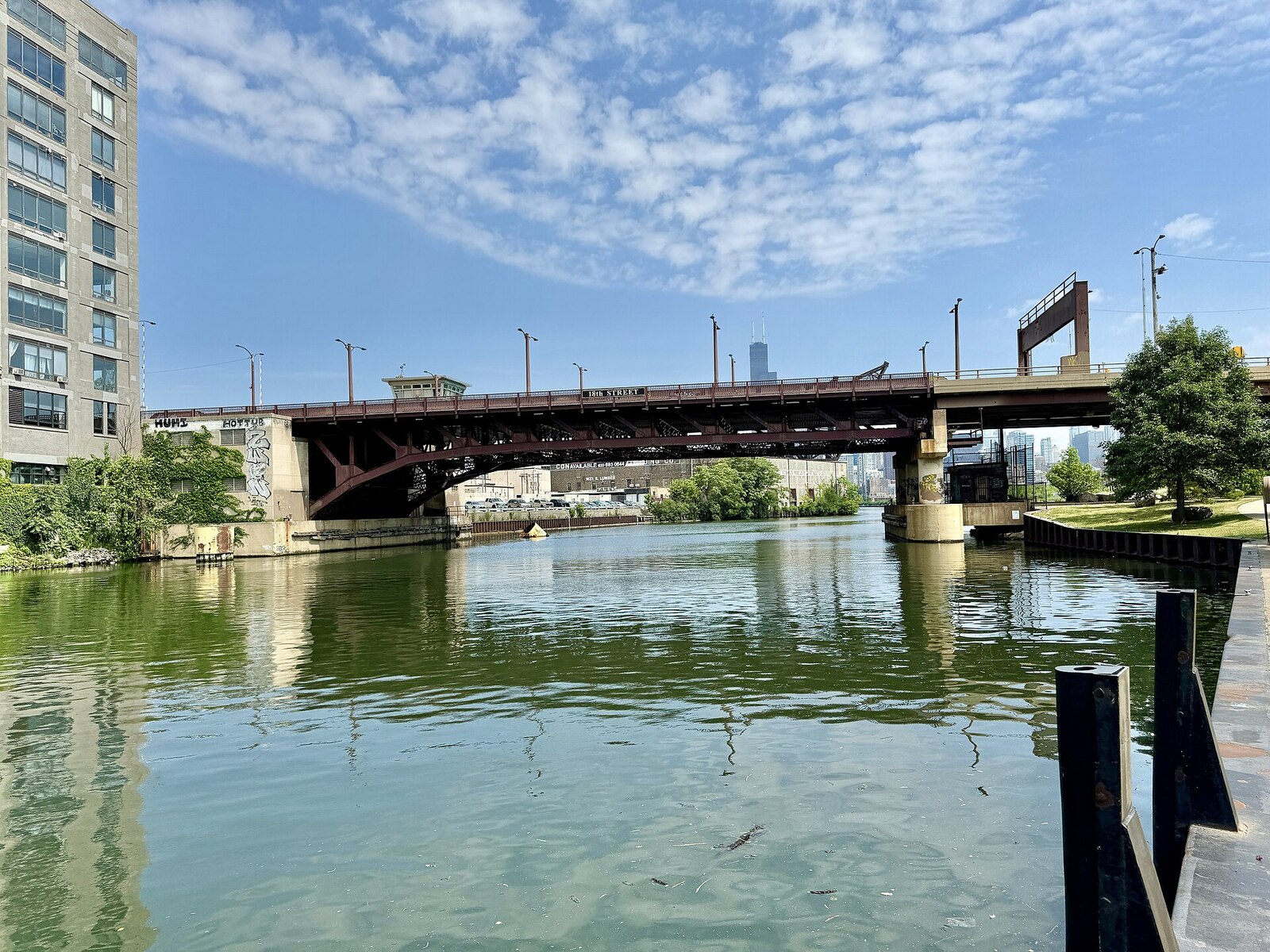
At 18th Street, a long viaduct crosses a landscape shaped by railways and the river. The movable span is only part of that larger structure. From the riverbank, its low truss sits between taller railway machinery and the distant skyline, making it an excellent place to compare bridges built for very different kinds of traffic.
History
The present crossing was completed in 1967 after a project that began in the mid-1960s. It replaced an earlier bridge from 1906, itself the successor to a nineteenth-century swing crossing. The Chinese American Museum of Chicago records the use of imported Italian steel in the replacement. The bridge’s surroundings have changed substantially as former railway land became part of the park landscape.
How it works
Unlike the paired leaves of many downtown bridges, one movable leaf spans the river here. It pivots upward from one bank around a fixed axle, balanced by a counterweight behind the pivot. Its long, low steelwork makes a useful comparison with Kinzie Street’s much taller single-leaf truss. The fixed approach spans continue well beyond the river itself, showing how a bridge must solve the crossing of adjacent infrastructure as well as water.
What to notice
- The single movable leaf across the channel
- The long viaduct continuing beyond the river
- The layered view of park, railway bridges, and skyline