This is a bridge to hear as well as see. In a city often introduced through its skyline, Wells offers a more immediate encounter with movement, weight, vibration, and the everyday engineering that keeps Chicago running.
History
Earlier floating and swing bridges occupied this crossing. The 1922 bascule was constructed with its leaves upright while the old bridge continued carrying trains. Once the old span was removed, the new leaves were lowered and the upper tracks connected. This carefully staged changeover minimized the interruption to rail service.
How it works
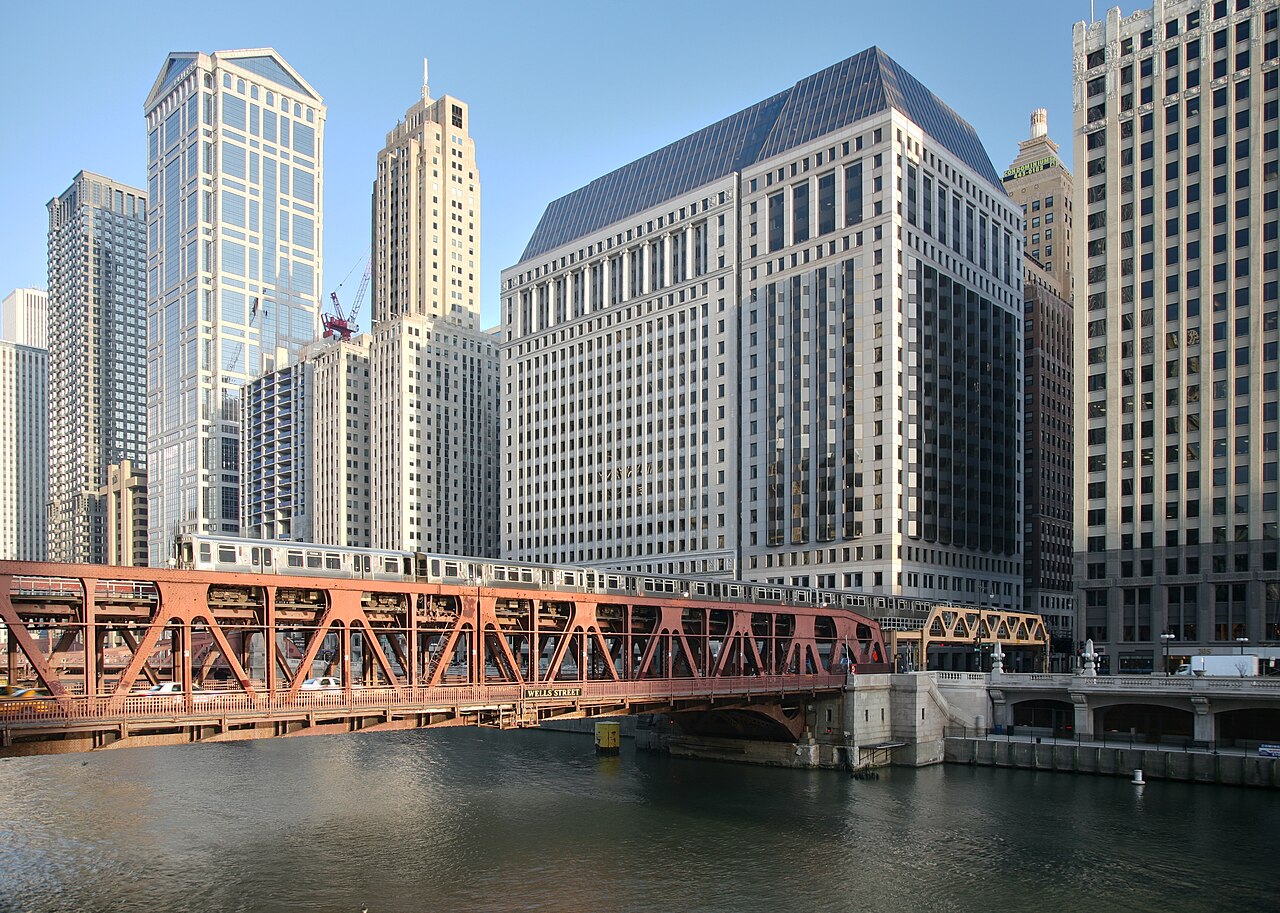
Road traffic and sidewalks occupy the lower level; elevated trains use the upper deck. Through trusses tie the composition together. Both levels belong to the moving leaves, making the structure particularly legible when viewed from an angle along the river.
What to notice
- The elevated tracks above the roadway
- The dense web of riveted steel
- The southeast and northwest bridgehouses