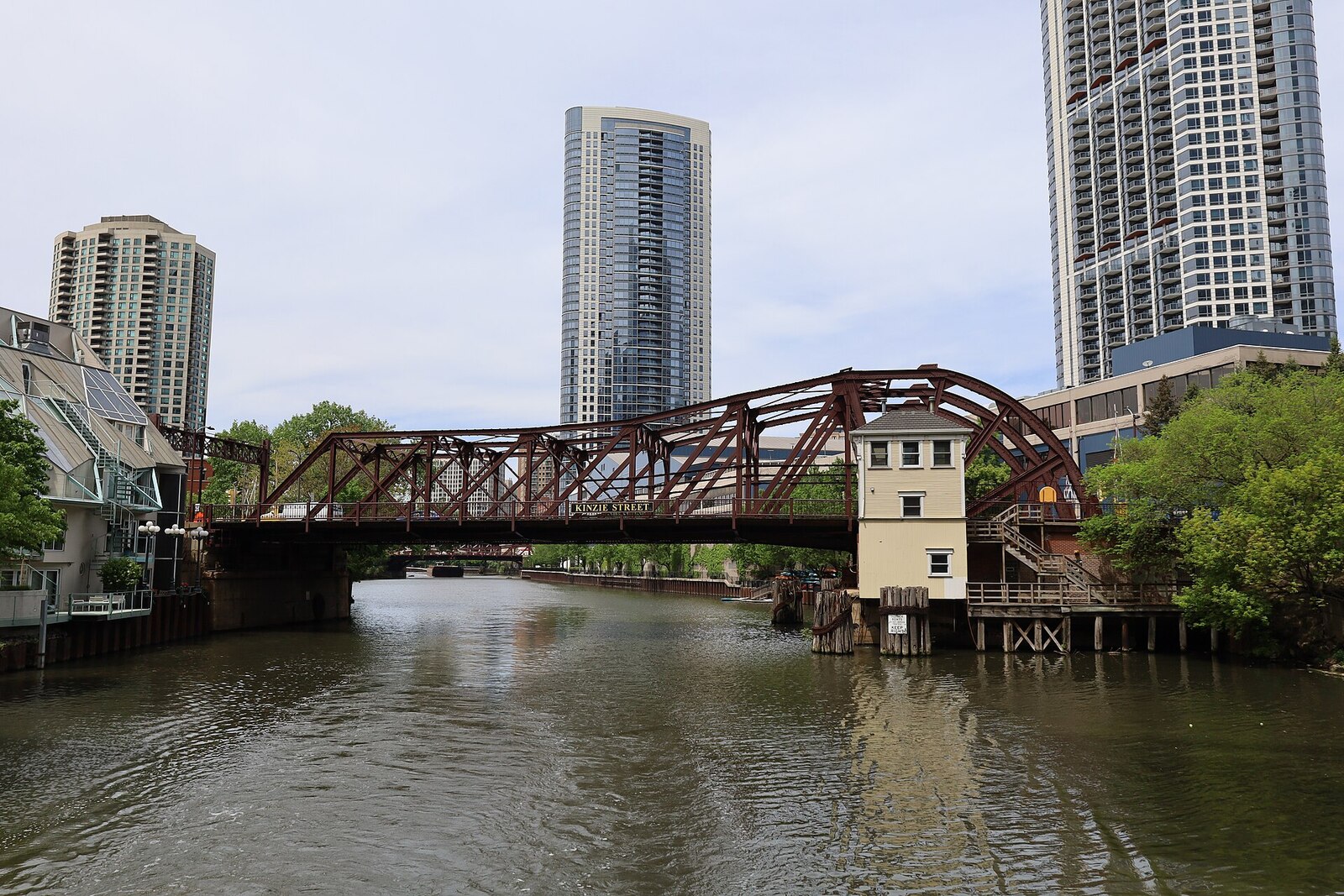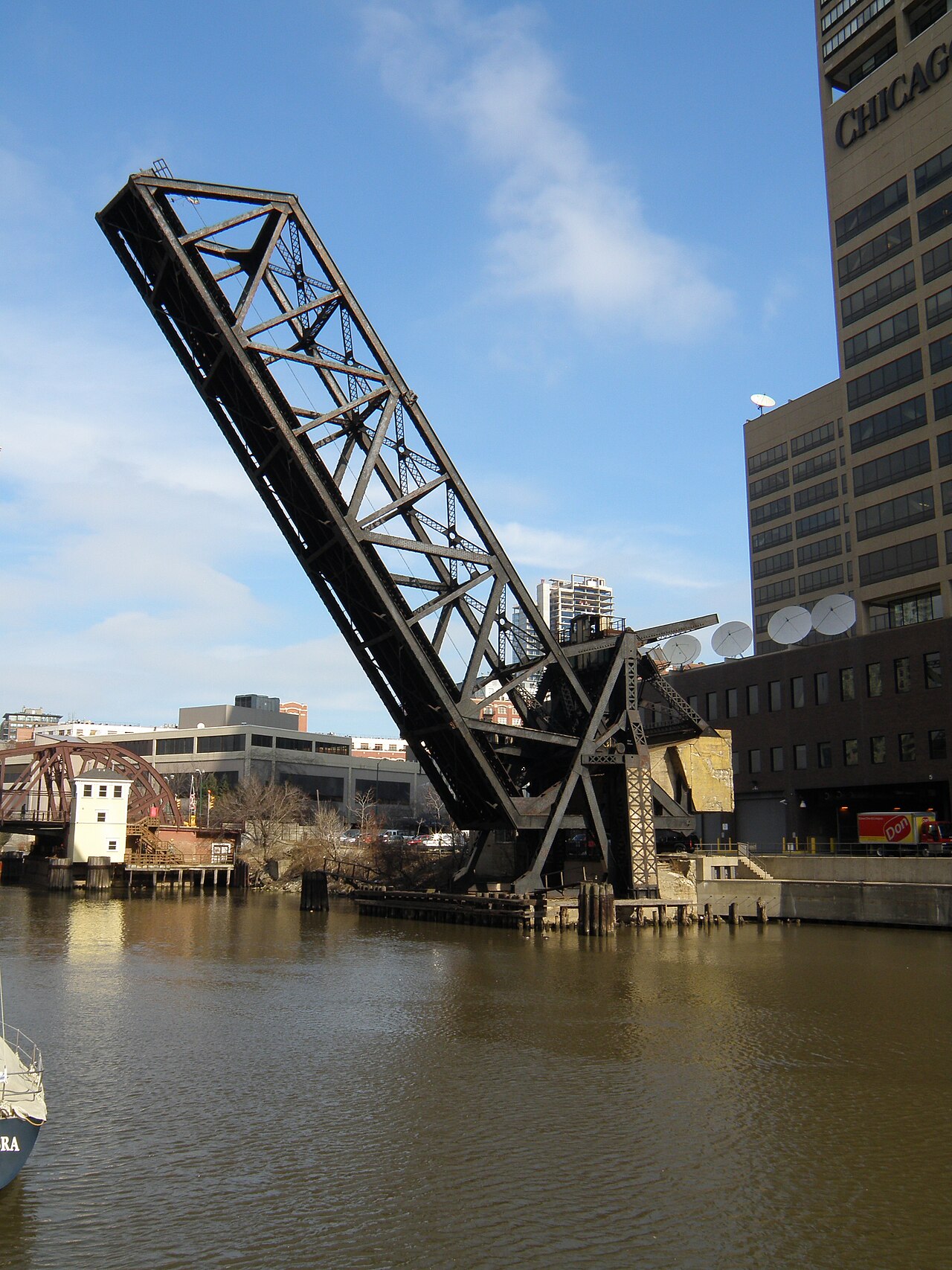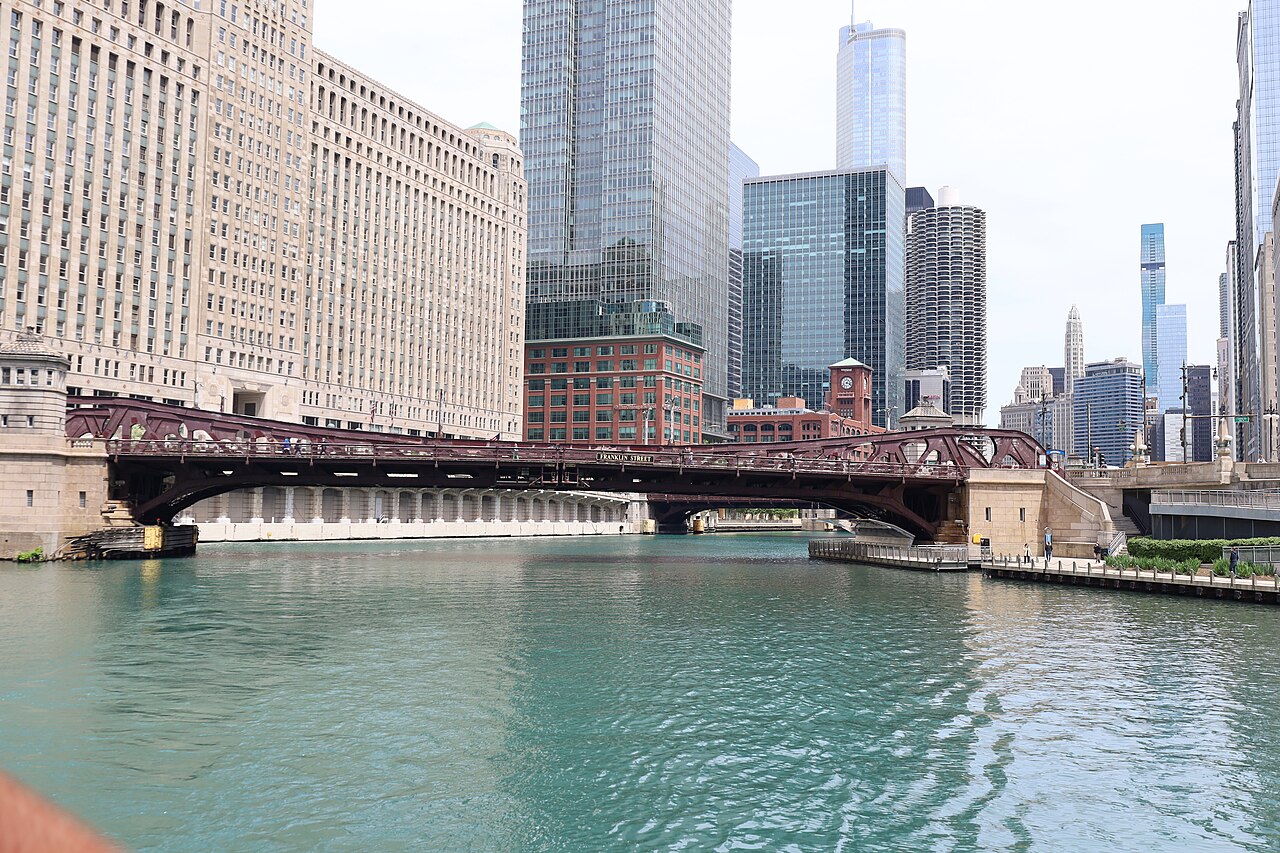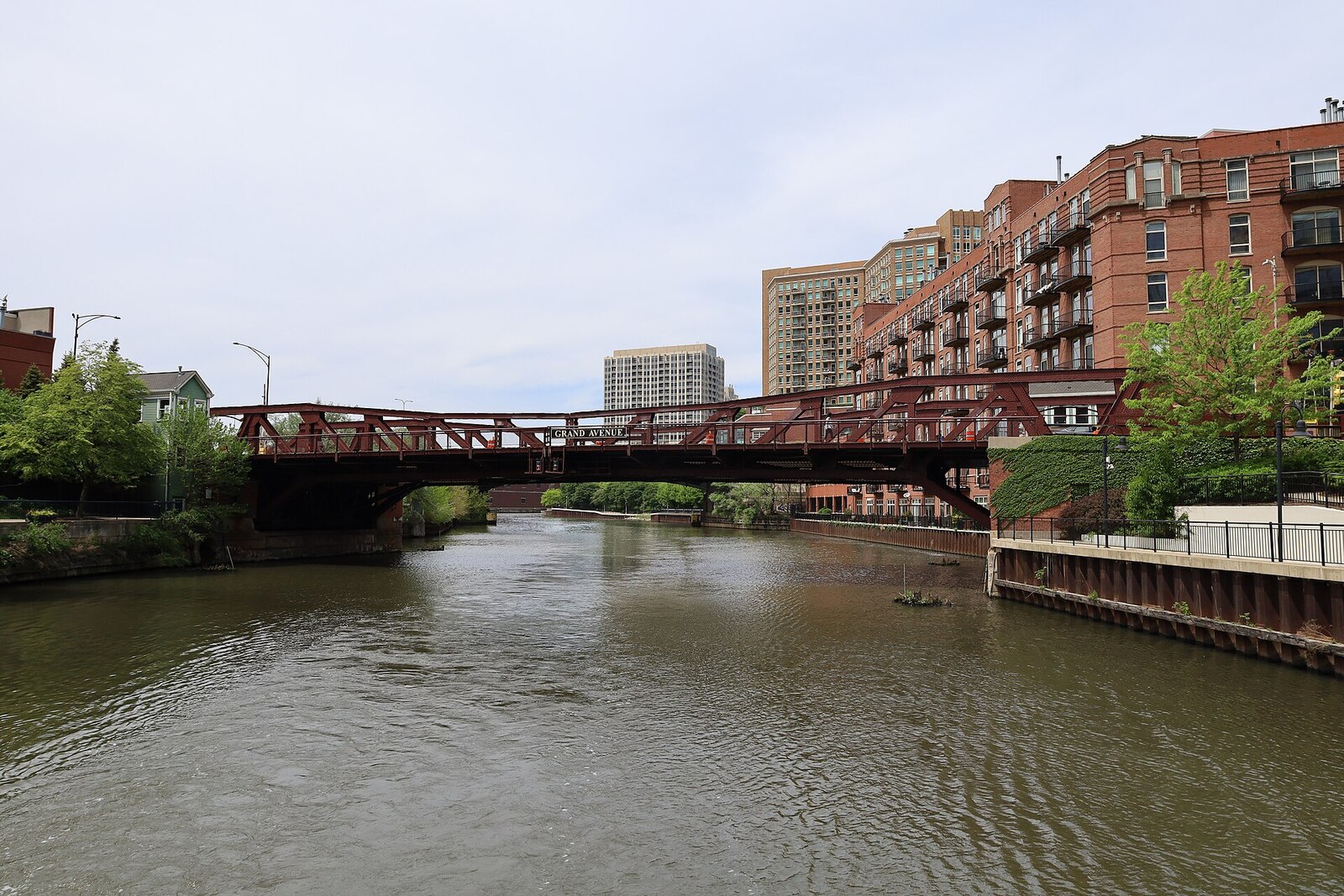
Grand Avenue offers a quieter comparison with the river’s better-known downtown crossings. Its low steel profile allows buildings, riverbanks, and bridgehouses to share the view. Just north of Kinzie, it is a useful place to see how the early Chicago bascule evolved from an emphatic industrial machine into a more compact part of the street.
History
The present bridge opened in December 1913. An earlier swing bridge had served the crossing when the street was called Indiana Street; the Grand Avenue name arrived in 1911. The replacement belongs to the second generation of Chicago-style bascules built in the early 1910s. Temporary arrangements during construction kept a crossing available while the river acquired its new structure.
How it works
Two leaves pivot upward from opposite banks, leaving the channel clear when raised. The low trusses sit beside the roadway instead of forming an overhead frame. Compared with nearby Kinzie’s single, hump-backed leaf, Grand Avenue has a more balanced silhouette. The bridgehouses are useful clues to its generation: their proportions and placement differ from the larger architectural towers that became familiar on the Main Stem.
What to notice
- The meeting point of the two leaves
- The low trusses beside the sidewalks
- The small bridgehouses at the approaches